

Summary
- A clear guide to balustrade Australian standards, outlining how the National Construction Code and key Australian Standards regulate when a balustrade is required and how it must perform.
- Compliance is governed by the NCC and supported by standards including AS/NZS 1170 (structural loading) and AS 1288 (glass), which define both safety outcomes and technical detail.
- A balustrade is generally required where a fall exceeds one metre, with minimum heights typically 865 mm on stairs and 1000 mm on landings, balconies and voids.
- Openings must restrict the passage of a 125 mm sphere, and the system must resist prescribed line and point loads based on the building classification.
- Fixing methods, structural capacity and material selection must align with the building’s use and the adopted edition of the Code.
- Confirming requirements early reduces approval delays, redesign risk and costly rectification during construction.
We are stair and balustrade specialists, and this article is intended as a practical overview of current Australian regulatory requirements.
Compliance outcomes can vary depending on your building type, location and design. For project-specific advice, we recommend confirming requirements before fabrication. Our team is available to help interpret the relevant standards and guide you through the process.
Balustrades are used every day, often without much thought. Yet behind each barrier sits a defined regulatory framework that governs how it must be designed and constructed.
In Australia, balustrade requirements are outlined in the National Construction Code and supported by relevant Australian Standards. These provisions establish minimum expectations for height, opening limitations and structural performance. Their purpose is straightforward: to provide consistent fall protection and long-term reliability across residential and commercial buildings.
A well-designed balustrade integrates compliance, structural integrity and architectural intent. Understanding how the balustrade Australian standards operate makes that alignment easier to achieve during design and construction.

What is a Balustrade
A balustrade is a protective barrier installed along the edge of a surface where there is a change in level.
It is commonly found on:
- Staircases
- Landings
- Balconies
- Mezzanines
- Decks
- Internal voids
- Raised decks
In some cases, a previously compliant balustrade may not satisfy current provisions. Confirming requirements before fabrication helps prevent delays during the approval process.

When a Balustrade is Required
Balustrade requirements are triggered by fall height.
Under the National Construction Code, commonly referred to as the NCC, a barrier is generally required wherever the difference in level exceeds one metre. Once this threshold is reached, compliant edge protection must be installed.
The one metre benchmark provides a consistent national reference point for determining when fall protection becomes mandatory.
This rule applies to any edge within a building where a person could fall more than one metre, regardless of whether the area is internal or external.
Renovation work can also activate compliance requirements. Replacing an existing balustrade, altering stair geometry, or modifying floor levels may require the new installation to meet the currently adopted edition of the Code.
In some cases, a balustrade that complied at the time of construction may not meet current provisions. Confirming requirements before fabrication helps prevent delays during the approval process.

The Regulations That Govern Balustrades in Australia
Two primary sources guide balustrade compliance in Australia:
Together, these documents define how balustrade Australian standards are applied in practice, including when a barrier is required and how it must perform.
The National Construction Code
The National Construction Code establishes the mandatory performance requirements for buildings across Australia.
Residential housing is generally assessed under Volume Two. Commercial and public buildings are addressed under Volume One. The applicable volume influences how balustrade requirements are interpreted and enforced.
Within the Code, balustrade provisions address:
- When a barrier must be installed
- Minimum height requirements
- Opening limitations
- Structural performance expectations
The Code sets the required safety outcomes. The Australian Standards provide the technical detail that supports compliance.

Key Australian Standards That Apply to Balustrades
Beyond the National Construction Code, several Australian Standards commonly apply to balustrade systems. The specific standards involved depend on how the building is used and the material selected.
AS NZS 1170: Structural Design Actions
AS NZS 1170 sets out the structural loading requirements for barriers and balustrades.
In simple terms, it defines the horizontal forces a balustrade must be designed to withstand. These loads account for people leaning, pushing or applying pressure along the barrier.
The required strength of the balustrade depends on how the building is used. Residential balustrades are designed for typical household occupancy. Commercial and public buildings require higher load resistance to reflect increased occupancy and greater pressure on the barrier.
Structural loading requirements influence:
- Post spacing
- Fixing design
- Glass thickness
- Cable diameter and tension
- Anchorage into concrete or timber framing
Engineering documentation is often required to confirm compliance.
AS 1288: Glass in Buildings
Where glass forms part of a balustrade system, AS 1288 applies.
This standard governs the selection and installation of glass in buildings. For balustrades, it sets requirements around:
- Glass type
- Minimum thickness
- Support and fixing conditions
- Edge clearances and installation tolerances
Glass panels must withstand the structural loads defined under AS NZS 1170 while limiting excessive movement.
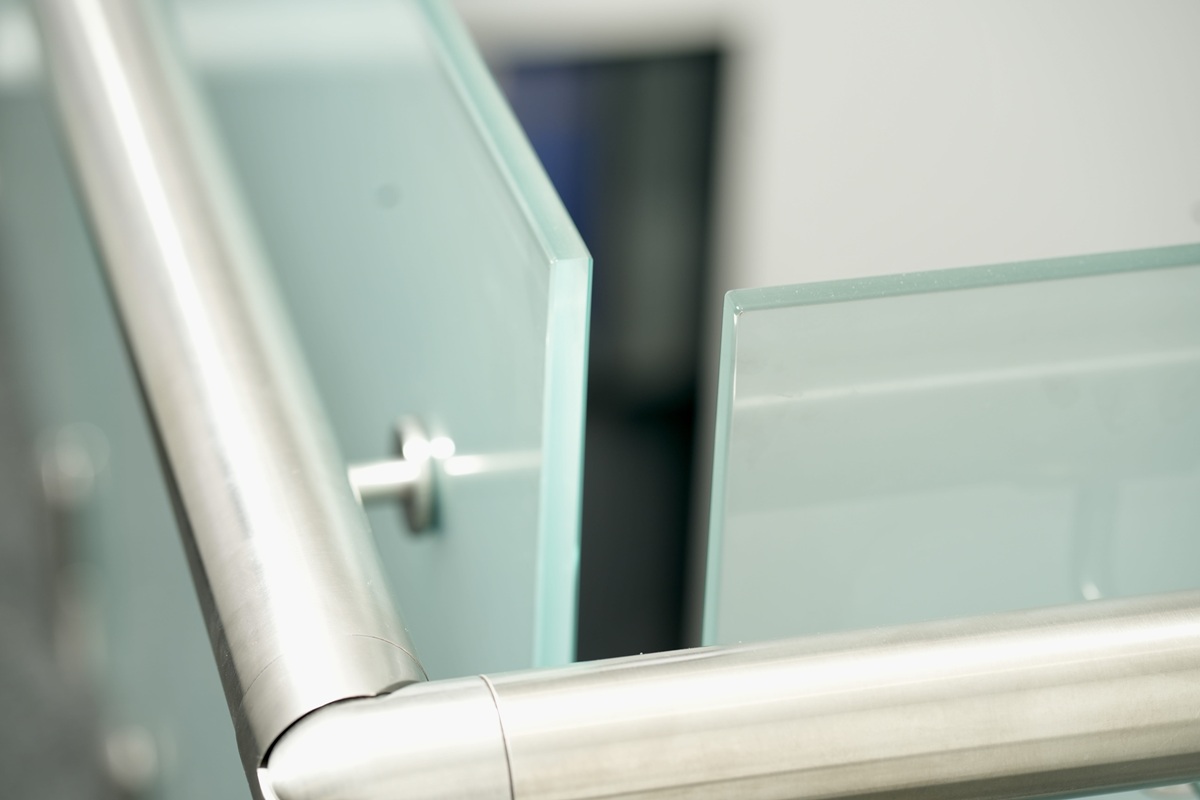
In frameless systems, the glass often acts as both the barrier and the primary structural element. Thickness, interlayer type and support method all affect compliance.
When designed and installed correctly, glass balustrades provide clear sightlines while meeting the same safety expectations as other barrier systems.
AS 1657: Fixed Platforms, Walkways and Stairways
AS 1657 applies primarily to industrial and maintenance access systems.
It is commonly referenced where balustrades form part of service platforms, plant access stairs or restricted areas within commercial buildings. In these environments, stair regulations may differ from those that apply to general access stairs under the National Construction Code.
These installations can be subject to different dimensional and loading criteria.
Where a stair or platform serves a non-habitable or service area, confirming whether AS 1657 applies during design helps avoid approval issues later.

Balustrade Height Requirements
Height is one of the most fundamental elements of balustrade compliance. The required dimension depends on where the barrier is located.
Along Stair Flights
Where a balustrade follows the pitch of a stair, the minimum height is generally 865 millimetres.
This measurement is taken vertically from the nosing line. Measuring from the flat tread surface instead can result in insufficient barrier height once finishes are installed.
Changes in floor finishes or stair geometry can affect the final measured height.
On Landings, Balconies and Voids
Where the balustrade protects a flat edge such as a landing, balcony or internal void, the minimum height is generally 1000 millimetres measured from finished floor level.
In some commercial settings or higher occupancy environments, greater heights may apply. The adopted National Construction Code volume should always be confirmed.
Opening Limitations and the 125 Millimetre Rule
Alongside height requirements, balustrades must also control the size of openings within the barrier.
Openings must not allow a 125 millimetre sphere to pass through above the stair nosing line or finished floor level.
The intent is clear. It reduces the risk of a child passing through the balustrade.
This limitation affects:
- Vertical baluster systems
- Wire and cable balustrades
- Glass panel installations
- Open riser stair designs
Vertical Balusters
Spacing must prevent a 125 millimetre sphere from passing through at any point. Assessment should consider the finished installation rather than nominal centre spacing.
Wire and Cable Systems
Cable balustrades require careful detailing. While spacing may appear compliant when static, lateral force can increase the effective gap.
Tensioning, cable diameter and post spacing must maintain compliant openings under load.
Open Riser Stairs
The gap between treads must also comply with the 125 millimetre limitation.
Coordinating dimensions during documentation reduces the likelihood of non-compliance at certification.

Structural Loading Requirements
Structural loading provisions form an important part of the balustrade Australian standards. They establish the horizontal forces a barrier must safely resist during normal use.
These requirements are set out in AS NZS 1170 and apply across residential and commercial settings.
Line Loads and Point Loads
Two main types of horizontal force are considered:
- A distributed line load along the top of the barrier
- A concentrated point load applied at a specific location
The line load represents pressure along the length of the balustrade. The point load represents the force applied at one position.
Both must be allowed for in the structural design.
Design and Fixing Implications
Loading requirements influence:
- Post spacing
- Fixing size and embedment depth
- Glass thickness and interlayer selection
- Cable diameter and tension
- Support configuration
- Substrate strength
In glass systems, controlling movement under load is particularly important. Excessive deflection can affect both structural performance and opening compliance.
Engineering documentation is often required to confirm that the installed system meets these requirements.
Residential and Commercial Differences
While the core principles of balustrade Australian standards remain consistent, required load capacities vary depending on building use.
In residential homes, balustrades are designed for normal household occupancy. Loads reflect typical domestic activity.
In commercial and public buildings, higher load resistance is required. Areas with greater occupancy levels or potential crowd pressure must account for increased horizontal force along the barrier.
This distinction influences engineering design, fixing specification and sometimes material selection. Confirming the correct building classification early ensures that structural requirements align with the intended use of the space.
Climbability and Barrier Design Considerations
Compliance does not end with height, openings and structural strength. In certain applications, balustrade design must also consider climbability.
A balustrade should not create unintended footholds that make climbing easier in areas where a significant fall could occur.
Horizontal Rails and Infill Elements
Horizontal components may increase climbing risk.
In higher fall situations, vertical balusters, solid panels or glass systems are often selected.
Wire and Cable Systems
Horizontal cable arrangements may raise climbability concerns depending on fall height and building use.
Design intent and compliance requirements should be considered together.
Adjacent Surfaces and Built Elements
Built-in seating, planter boxes or fixed elements placed adjacent to a barrier can reduce effective height.
The surrounding layout should be reviewed alongside the balustrade configuration.
Internal and External Balustrade Considerations
While the core compliance principles remain consistent, the location of a balustrade influences how it must perform over time.
Environmental exposure, building use and surrounding construction all affect design decisions.
Internal Balustrades
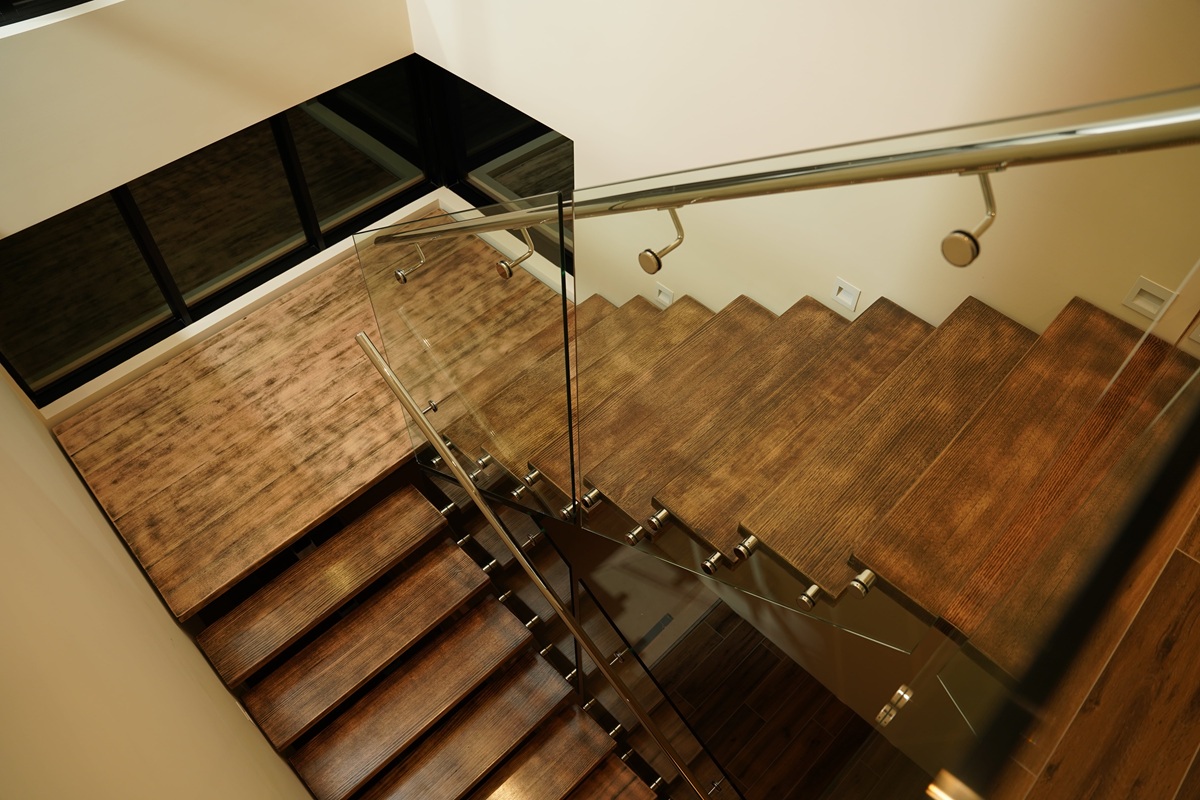
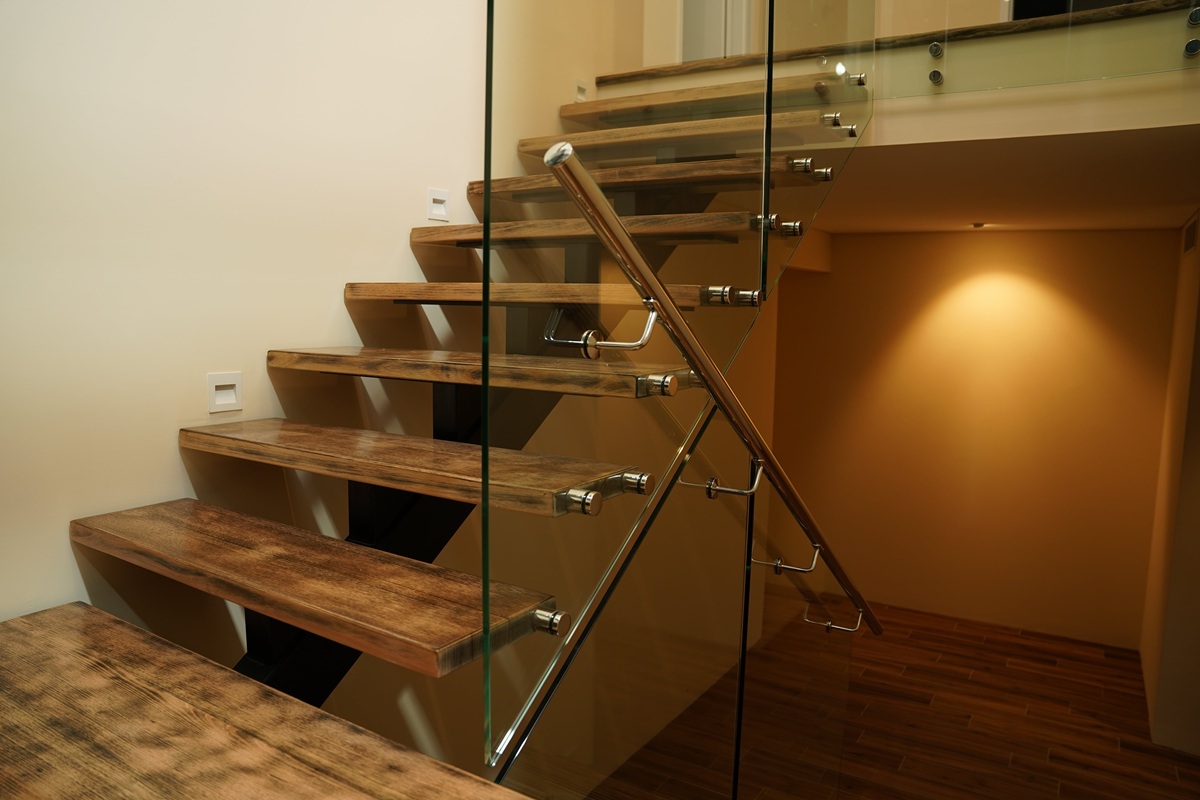
Internal balustrades are commonly installed along staircases, voids and upper-level landings.
In these settings, key considerations include:
- Integration with stair geometry
- Accurate measurement from finished floor levels
- Coordination with handrails
- Clean junctions at walls and floor transitions
Internal systems are generally protected from weather exposure, but they must still meet structural loading and opening limitations.
Detailing is particularly important around void edges, where small gaps between finishes and barrier elements can create unintended openings.
External Balustrades
External balustrades are exposed to weather, moisture and environmental variation.
In addition to dimensional and structural compliance, external systems must account for:
- Wind exposure
- Corrosion resistance
- Water ingress at fixing points
- Long-term material durability
Coastal environments require careful material selection and protective finishes. Stainless steel grades, powder coating systems and glass edge treatments should reflect the installation location.
Fixing methods must also consider substrate conditions and waterproofing. Poor coordination at slab edges can compromise both structural performance and building envelope integrity.

Material Considerations and Compliance
Different materials respond differently under load, environmental exposure and long-term use. Balustrade Australian standards apply across all material types, but design detailing varies.
Steel and Stainless Steel
Steel balustrades rely heavily on correct fixing and protective finishes. In external environments, corrosion resistance becomes a primary consideration.
Stainless steel grades should be selected according to location, particularly in coastal areas. Surface finishes and fabrication quality also influence durability over time.
Timber
Timber balustrades must account for natural movement. Shrinkage, expansion and moisture exposure can affect spacing and fixing performance if not properly detailed.
Structural capacity must also consider timber species and section sizing.
Glass
Glass systems depend on correct thickness selection, edge support and interlayer specification. Toughened and laminated configurations behave differently under load.
Where frameless systems are used, the glass panel often performs as the structural barrier itself. Correct specification is essential to maintain both strength and opening compliance.
Wire and Cable Systems
Cable systems require careful tensioning and ongoing adjustment where necessary. Deflection under load must not increase spacing beyond allowable limits.
Post spacing and cable diameter must be coordinated to maintain compliance in real-world conditions, not just on drawings.
Selecting materials with compliance in mind at the outset allows design and structural performance to align more smoothly.
How Balustrade Compliance is Assessed
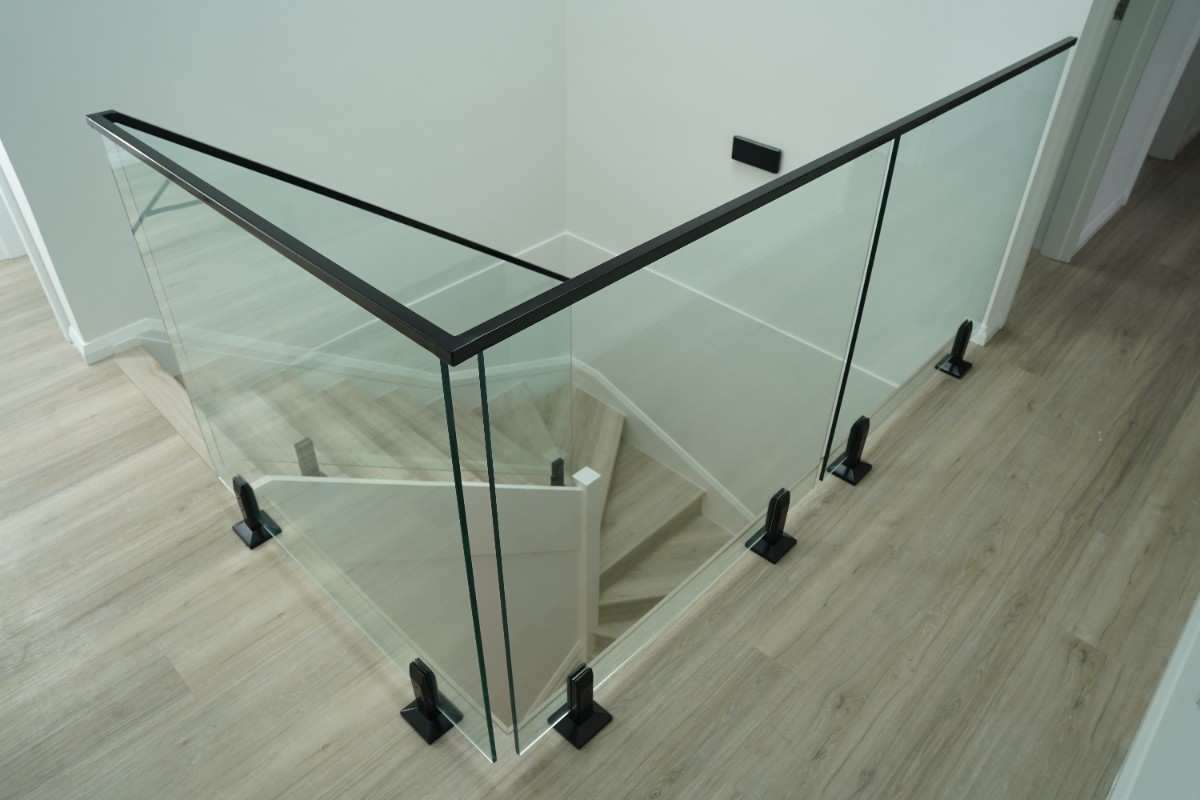
Balustrades are assessed as part of the overall building approval process. The pathway taken depends on how closely the design aligns with the published provisions in the National Construction Code.
In many residential projects, compliance is demonstrated by following the stated height, spacing and structural loading requirements. When these criteria are met clearly, approval is usually straightforward.
Where a design varies from typical dimensions or fixing methods, additional documentation may be required to show that the balustrade still meets safety requirements.
Feature balustrades, unconventional fixing methods or highly architectural layouts sometimes require engineering input to confirm it performs as required.
The objective remains the same in every case. The balustrade must provide reliable fall protection and structural stability. What changes is the level of documentation needed to confirm that outcome.
Discussing the approach with your builder or certifier before fabrication helps reduce uncertainty later.
State Variations and Certification
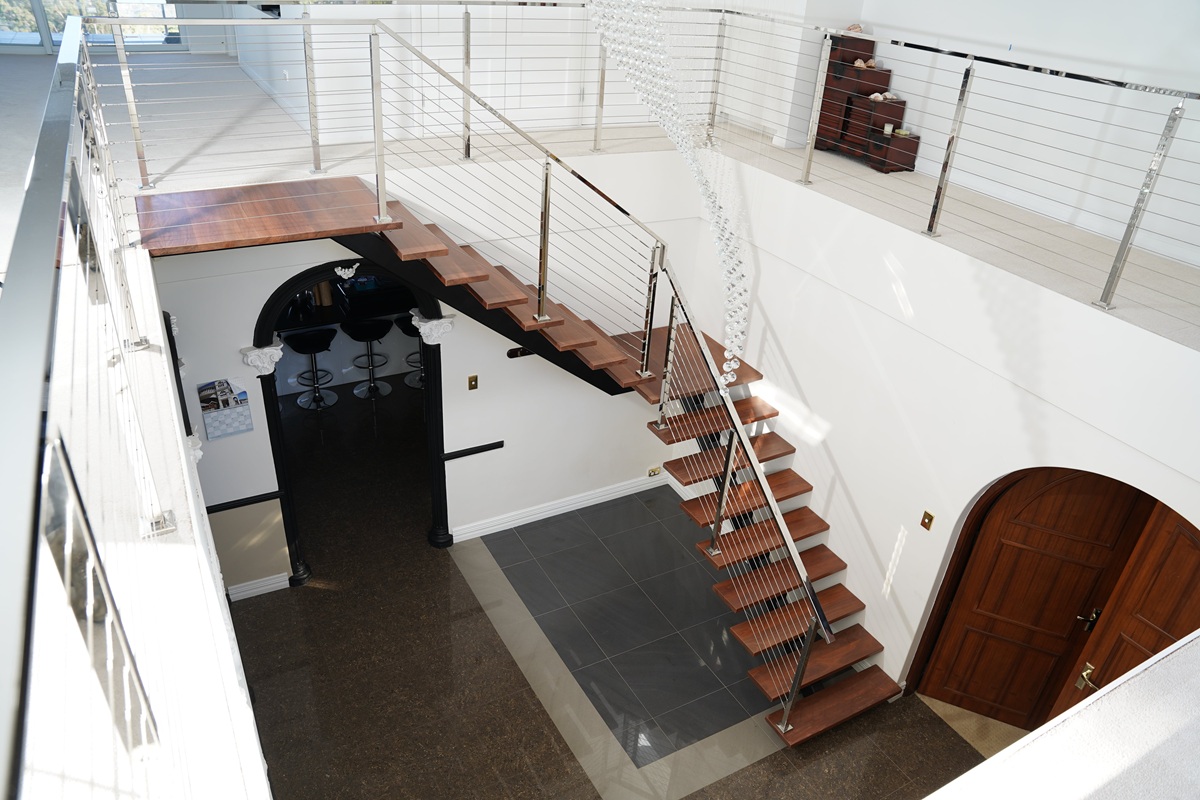
Although the National Construction Code is adopted across Australia, it is implemented at a state and territory level.
Each jurisdiction adopts a specific edition of the Code and may introduce local variations or timing differences between updates. These differences can influence how compliance is assessed.
For balustrades, variations are usually subtle. They may affect:
- The adopted edition of the Code
- Referenced standards
- Documentation expectations
- Certification processes
Balustrade compliance is reviewed as part of the broader building approval process. Building surveyors or certifiers assess whether the installed system meets the required height, opening and structural provisions.
Where engineering documentation is required, it forms part of this review.
Confirming which version of the Code applies to your project and ensuring documentation is prepared early helps reduce delays during approval.
Common Balustrade Compliance Mistakes
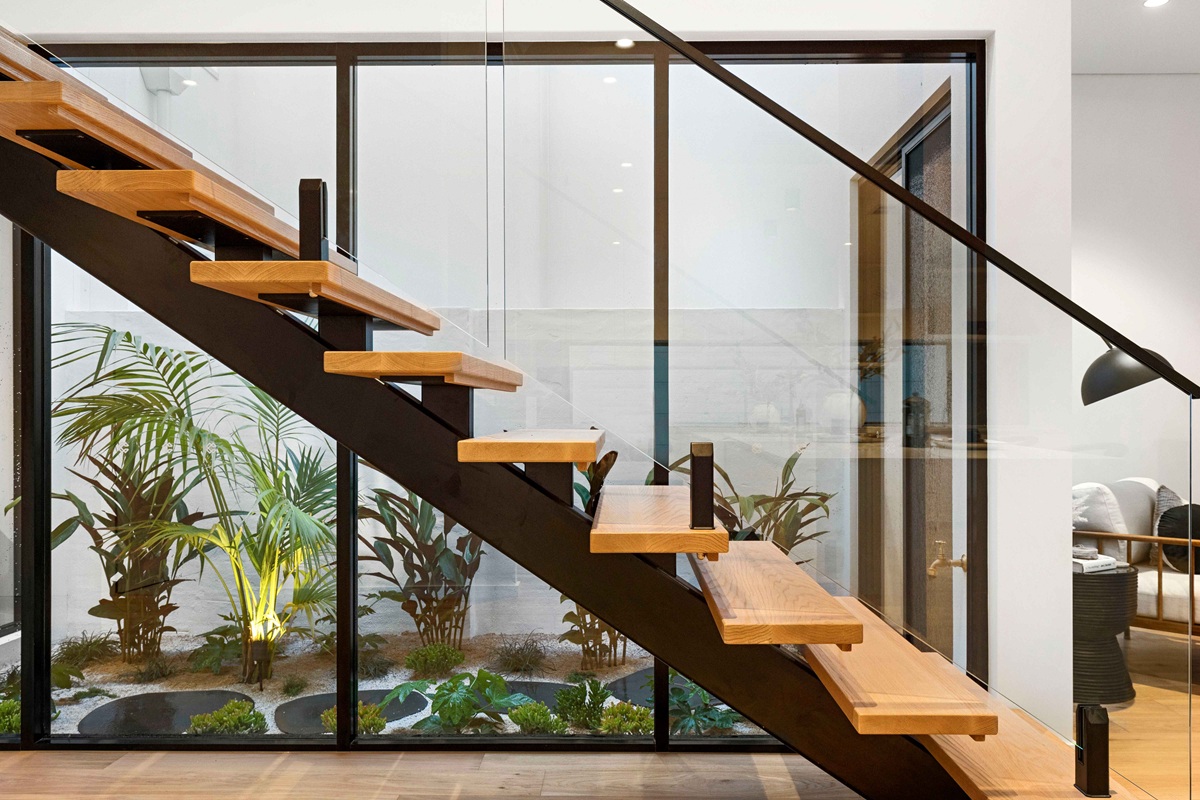
Balustrade compliance issues rarely stem from misunderstanding a single requirement. More often, they arise from small coordination gaps that are identified late in the approval process.
Measuring From the Wrong Reference Point
Height must be measured from the correct surface.
On stairs, measurement is taken from the nosing line. On landings and balconies, it is taken from the finished floor level. Measuring from structural slabs before floor finishes are installed can result in insufficient barrier height once coverings are in place.
Overlooking Deflection in Cable Systems
Cable and wire balustrades may meet spacing requirements when static, but exceed allowable openings once lateral force is applied.
Proper tensioning, cable diameter selection and post spacing are critical to maintaining compliant gaps under load. Finished spacing should always be assessed under realistic conditions rather than relying solely on nominal dimensions.
Inadequate Fixing Into the Substrate
The visible balustrade is only part of the system. Structural performance depends heavily on how it is anchored.
Common issues include:
- Insufficient embedment depth in concrete
- Fixing into non-structural elements
- Edge distances that reduce capacity
- Poor coordination with slab reinforcement
These issues can compromise load performance even if the balustrade appears compliant.
Assuming Existing Balustrades Are Compliant
Older homes may contain balustrades that met the Code at the time of construction but do not satisfy current provisions.
When replacing or modifying a balustrade, current requirements usually apply. Confirming compliance before fabrication helps avoid approval delays.
Confusing Pool Fencing With Balustrades
Pool fencing requirements differ from general balustrade provisions. Although both provide fall protection, they are governed by separate standards and should not be treated interchangeably.
Late Design Changes
Altering floor finishes, slab heights or adjoining built elements can affect final measurements, effective barrier height and structural performance.
Design revisions late in construction often require rechecking both dimensional and loading compliance.
How Balustrade Standards Influence Design
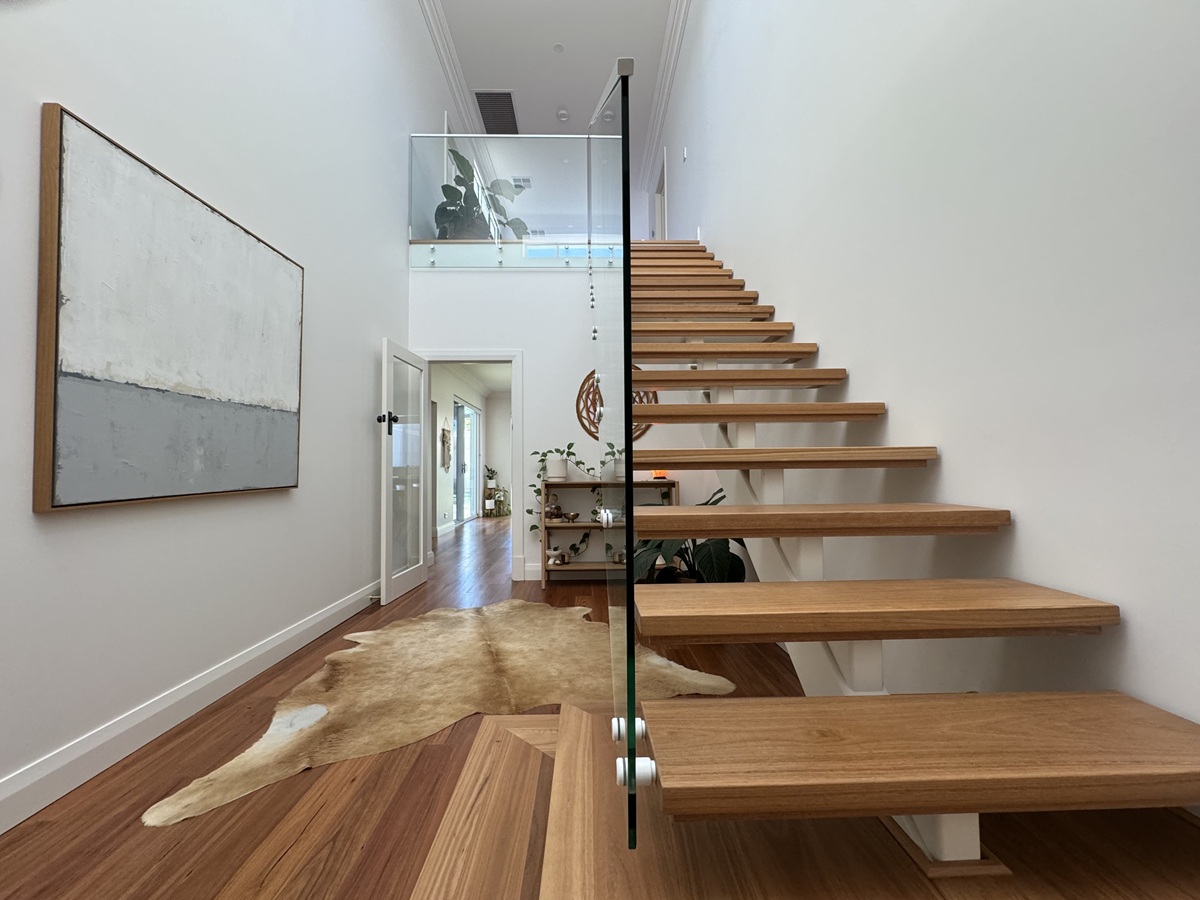
Balustrade Australian standards do more than define minimum dimensions. They influence how a system is detailed, fixed and integrated into the surrounding structure.
When compliance is considered early, it supports better design outcomes.
Top Mounted and Side Mounted Systems
The fixing method plays a significant role in both structural performance and visual appearance.
Top-mounted balustrades rely on the strength and thickness of the supporting slab or framing. Edge distances and waterproofing coordination are critical.
Side-mounted systems can create a cleaner floor line and maximise usable space, but they require careful structural assessment at the slab edge.
The chosen fixing method must align with structural loading requirements and substrate capacity.
Glass Panel Sizing and Deflection
In glass balustrades, panel height and span directly affect thickness requirements and deflection behaviour.
Larger panels may require increased thickness or alternative fixing methods to satisfy loading criteria. Early coordination between the designer and engineer ensures visual intent aligns with compliance expectations.
Post Spacing and Structural Rhythm
Post spacing is often influenced by aesthetic preference. However, structural loading provisions may limit maximum spacing depending on material type and fixing configuration.
Balancing visual rhythm with structural performance is a key part of compliant design.
Integration With Handrails
In some settings, a separate handrail may be required in addition to the balustrade.
Height alignment, continuity and fixing detail must be coordinated to ensure both systems perform correctly without conflicting visually.
Getting It Right From the Start
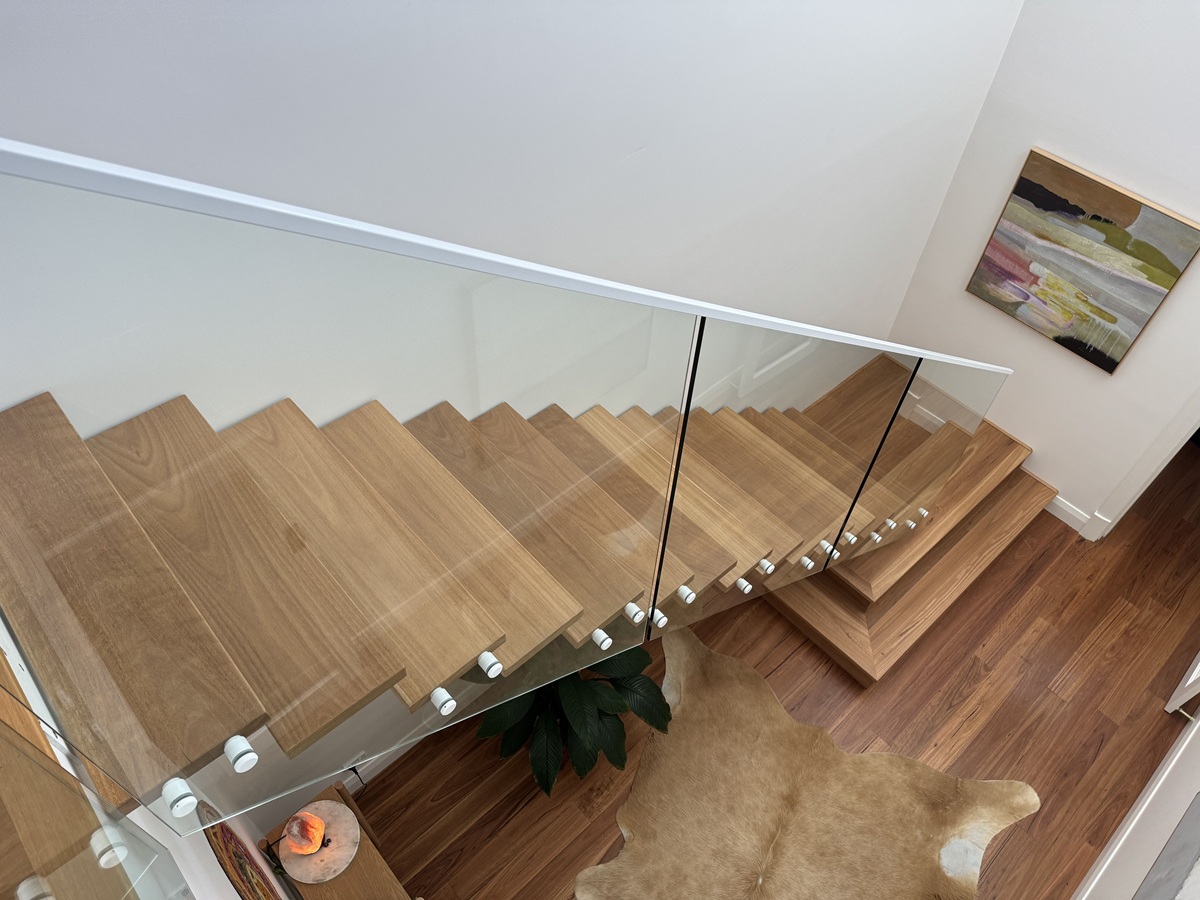
Balustrade requirements influence more than barrier height. They affect fixing methods, structural support, material selection and how the system connects to the surrounding structure.
Addressing these requirements early helps prevent redesign during certification and avoids costly adjustments once installation has begun. Clear documentation, accurate measurement and proper engineering input provide certainty before fabrication.
When compliance is resolved at the outset, the finished balustrade performs as intended and integrates cleanly within the overall project.
Expert Guidance for Compliant Balustrades
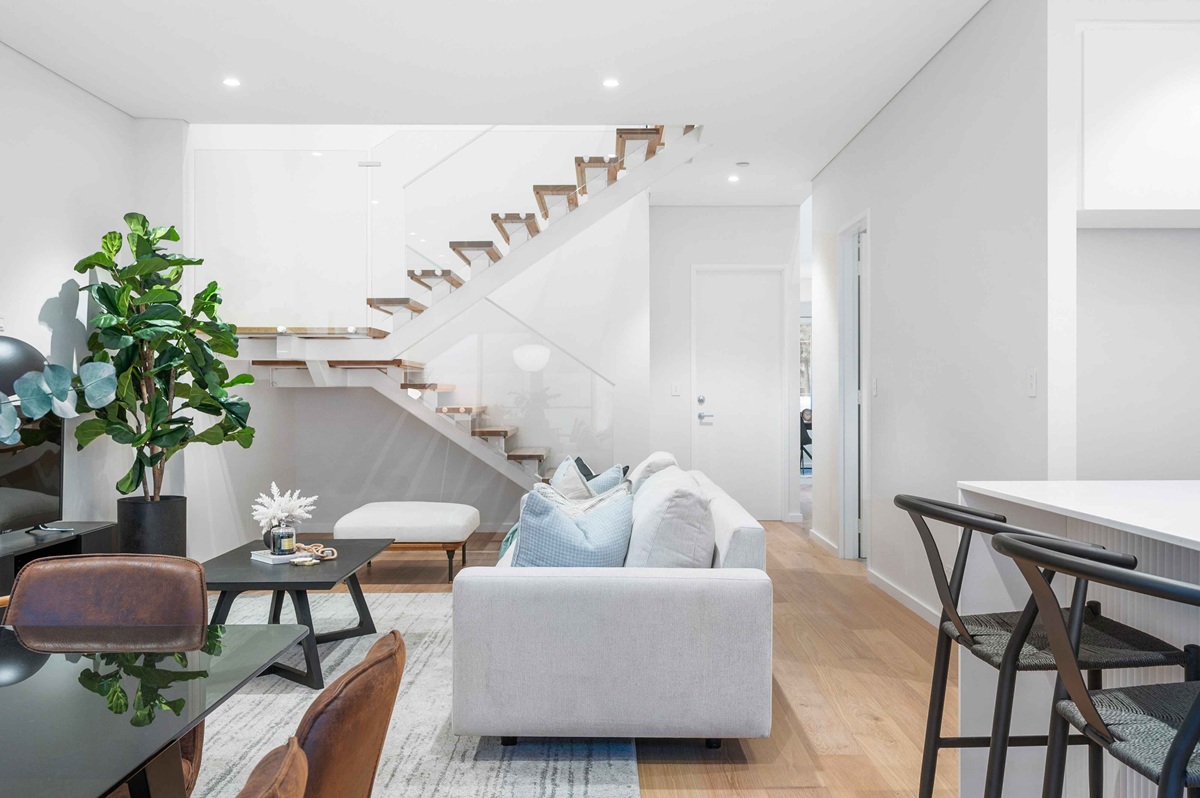
Applying balustrade Australian standards correctly involves more than checking dimensions. Structural loading, material behaviour and installation detail must work together.
At Aussie Stairs, compliance is built into every balustrade system we design and fabricate. We work closely with homeowners, builders and designers to ensure each installation aligns with the current National Construction Code and relevant Australian Standards.
With more than 400 five-star Google reviews and the largest stair showroom in Perth, our team provides practical guidance backed by experience.
Book a consultation or visit our Maddington showroom with your plans and measurements. Our team will confirm the correct compliance pathway before fabrication begins.
Frequently Asked Questions
Do balustrade requirements differ between states in Australia?
While the National Construction Code applies nationally, each state and territory adopts a specific edition and may introduce local variations. Always confirm which Code version applies to your project location before finalising design or fabrication.
Do I need council approval to replace an existing balustrade?
Approval requirements depend on the scope of work and your local authority. In many cases, replacing or modifying a balustrade requires compliance with the currently adopted Code, even if the original installation pre-dated current standards.
What happens if my balustrade does not pass inspection?
If a balustrade does not meet height, opening or structural requirements, rectification may be required before final approval is granted. Early design verification helps reduce the risk of rework.
Can I modify my existing balustrade without upgrading it to current standards?
Minor maintenance may not trigger full compliance upgrades. However, structural alterations or replacement typically require alignment with the current Code. Confirm requirements before proceeding.
How do I confirm my balustrade design will meet Australian standards?
Confirm the applicable Code edition, identify relevant Australian Standards, and obtain appropriate engineering documentation before fabrication. Early review by a qualified supplier or certifier helps streamline approval.


.svg)