

%20(1).png)
Summary
- A glass balustrade is a structural safety barrier made from engineered glass, designed to protect elevated areas while maintaining light and visibility.
- It is commonly used on staircases, balconies, decks, and internal voids where both safety and open design are important.
- Glass is often chosen for its ability to improve natural light, preserve views, and create a clean, architectural finish.
- The right system depends on the structure, location, and overall design, including whether a top-mounted or side-mounted approach is more suitable.
- Cost is influenced by factors such as glass specification, system design, and installation complexity, rather than a single fixed price.
- Planning early, meeting Australian Standards, and working with experienced professionals helps ensure the balustrade performs correctly and integrates seamlessly with the home.
Glass balustrades are often one of the first features people notice in a modern home. They appear clean, minimal, and almost effortless in how they open up a space.
What sits behind that simplicity is a series of important decisions. The type of glass, how it is fixed, and how it integrates with the structure all influence the final result.
It is also common to reach a point where the question shifts from inspiration to understanding. What is a glass balustrade in practical terms, and how do you choose a system that actually works for your home?
A well-designed glass balustrade does more than meet a safety requirement. It shapes how light moves through the space, how areas connect, and how the overall design comes together.
Understanding how these systems work makes it easier to make the right decisions early and avoid compromises later.
What is a Glass Balustrade?
A glass balustrade is a protective barrier made from structural glass panels, installed along edges where there is a change in level.
It serves the same purpose as traditional balustrades, but allows light to pass through and maintains visibility. This creates a more open and connected feel within the space.
In practical terms, a glass balustrade works as both a safety feature and a design element. It protects elevated areas while contributing to the overall layout and visual flow of the home.
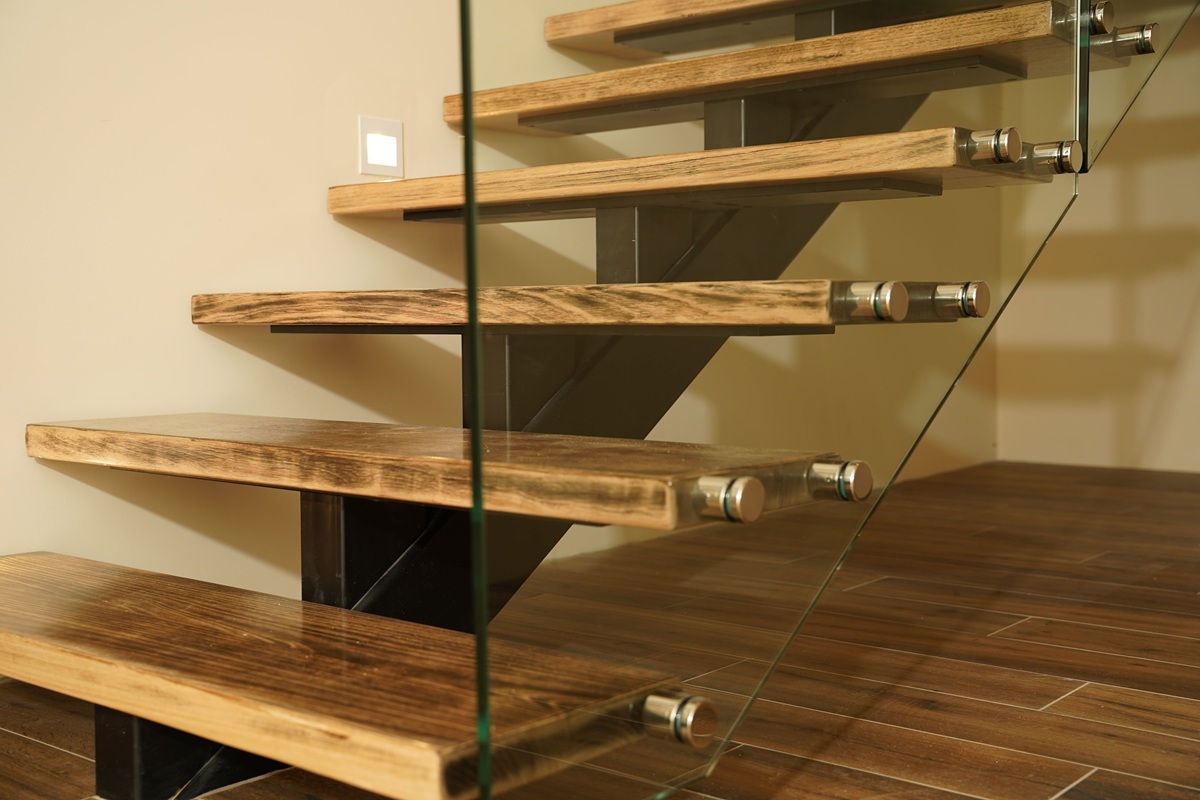
Where Glass Balustrades are Used
Understanding where glass balustrades are typically used helps clarify how they function within different parts of a home.
Staircases
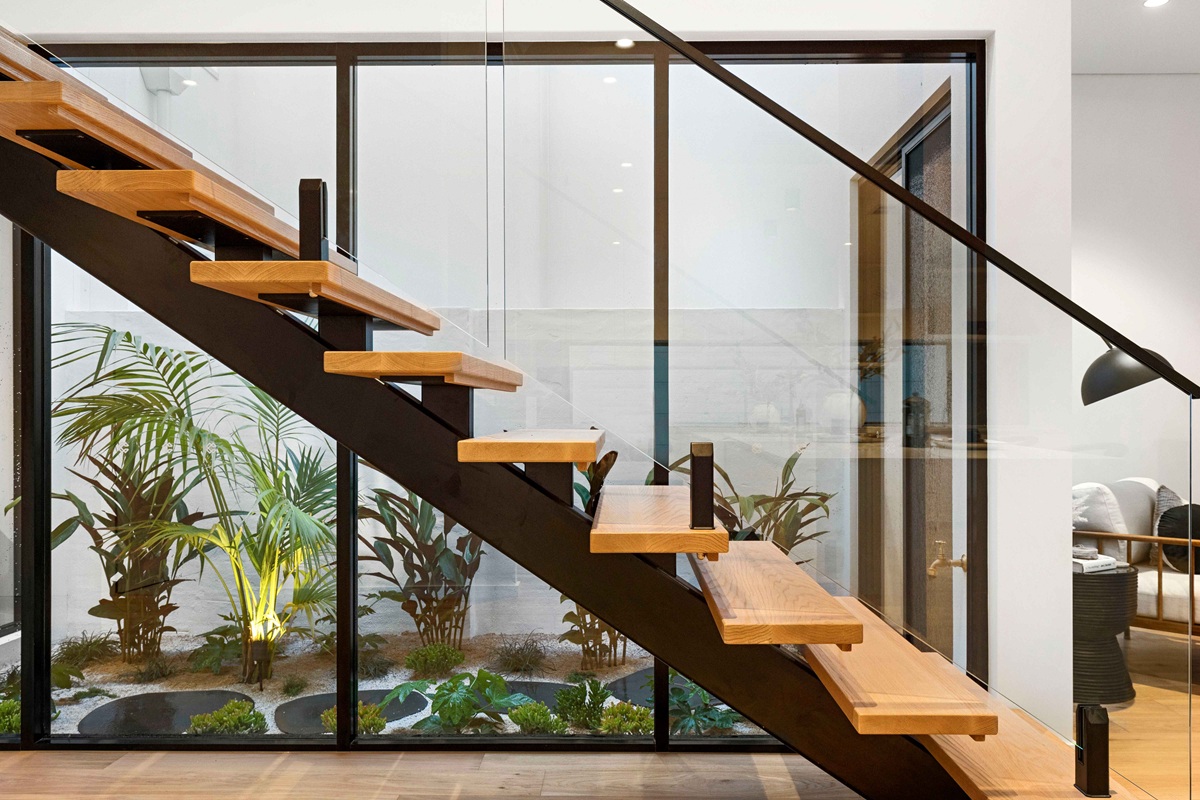
On staircases, glass balustrades provide fall protection while maintaining clear sightlines between levels. This supports an open-plan layout and avoids visually breaking up the space.
Balconies and Decks
In outdoor areas, glass balustrades are used to enclose elevated spaces without obstructing views. This allows the surrounding landscape to remain part of the experience.
Internal Voids and Landings
In multi-level homes, glass balustrades are commonly installed around voids and upper-floor landings. They allow light to travel between levels and help maintain visual continuity throughout the home.
Across all of these applications, the goal remains consistent. The balustrade provides safety without interrupting the overall design.

Why Choose a Glass Balustrade?
Once you understand what a glass balustrade is and where it is used, the next step is understanding why it is often chosen over other materials.
Glass balustrades bring together practical performance and design flexibility in a way few other systems can.
Improved Natural Light
One of the most noticeable benefits is how glass changes the flow of light within a home. Solid balustrades can create shadows or visual breaks, particularly around staircases and upper levels.
Glass allows light to pass through uninterrupted, helping brighten the space and connect different areas more naturally.
Clear, Uninterrupted Views
Glass preserves visibility in a way that other materials cannot. In areas where the outlook matters, like balconies or outdoor entertaining spaces, this makes a noticeable difference.
It allows you to maintain a connection to your surroundings while still meeting safety requirements.
A Clean, Architectural Finish
From a design perspective, glass offers a refined and considered result. Frameless systems create a seamless look, while semi-frameless options introduce subtle structure.
In both cases, the balustrade feels integrated into the home rather than added at a later stage.
A Greater Sense of Space
Glass changes how a space is perceived. Without visual barriers, rooms feel larger and more open.
This is particularly valuable in compact homes or narrower areas where maintaining a sense of space is important.
Strength and Safety
Concerns around strength are common, but glass balustrades are engineered for structural performance.
They typically use toughened or laminated safety glass, both designed to meet Australian Standards and perform reliably under load. When specified correctly, they provide long-term safety and durability.
Low Maintenance
Glass does not require painting or sealing and does not deteriorate in the same way as timber.
Regular cleaning is needed to maintain clarity, but ongoing maintenance is simple and predictable.

Types of Glass Balustrade Systems
With a clear understanding of the benefits, the next step is looking at how different systems are designed.
The fixing method plays a central role in both appearance and structural performance.
Top-Mounted Systems
Top-mounted glass balustrades are fixed directly onto the surface below, such as a slab or stair tread. This is commonly achieved using base channels or spigots.
This approach provides a stable and widely applicable solution. It suits many residential layouts and works well across both internal and external areas.
Because the system sits on top of the structure, it requires coordination with finishes and, in outdoor settings, waterproofing.
Side-Mounted Systems
Side-mounted systems are fixed to the vertical face of the structure rather than the top surface.
This keeps the floor area clear and creates a cleaner edge detail. It is often used on balconies where maximising usable space is important.
The structural capacity of the fixing surface needs to be considered early to ensure the system performs correctly.
Frameless and Semi-Frameless Options
In addition to fixing methods, glass balustrades vary in visual structure.
Frameless systems remove visible posts and rails, creating an uninterrupted finish. The glass becomes a key structural component, which requires careful specification.
Semi-frameless systems incorporate posts or supports. This allows for greater flexibility in certain applications while still maintaining a modern appearance.
Selecting the right system depends on the structure, the design intent, and how the space will be used.
Glass Balustrades vs Other Balustrade Options
If you’re early in the decision process, it’s natural to compare materials. Glass is often considered alongside powder coated, wire, and timber balustrades, each offering a different balance of design, visibility, and maintenance.
The right choice depends on how you want the space to feel, how much visibility you need, and how the balustrade needs to perform over time.
Glass balustrades are typically chosen when visibility and light are priorities. Steel and wire systems can suit more structured or industrial designs, while timber is often selected for traditional or warmer interiors.
Understanding these differences helps narrow down the right direction before moving into system selection.

How to Choose the Right Glass Balustrade
Once you understand the different systems and how they compare to other materials, the next step is narrowing down what works for your home.
The right choice usually comes down to how the balustrade needs to perform within your space, rather than a single design preference.
Start With the Structure
The structure you are working with will often determine which systems are suitable.
Top-mounted systems rely on the strength of the surface below, while side-mounted systems require sufficient support at the slab edge. In some cases, the structure may limit which option is practical without additional work.
Confirming this early helps avoid redesign later in the project.
Consider How the Space Is Used
The function of the space also plays a role in selecting the right system.
A staircase, for example, has different requirements to a balcony exposed to wind and weather. Internal areas tend to prioritise visual flow, while external areas require additional consideration for durability and exposure.
Thinking about how the space will be used day to day helps guide the right level of specification.
Align With Your Design Direction
Design still plays an important role, but it works best when considered alongside structure and function.
Frameless systems create a minimal, uninterrupted finish. Semi-frameless systems introduce more definition and can work well where additional structure is needed.
The goal is to choose a system that feels consistent with the rest of the home rather than standing apart from it.
Balance Visibility and Privacy
Glass offers different levels of transparency depending on the finish.
Clear glass maximises light and views, while frosted or tinted options provide more privacy. The right balance depends on the location and how exposed the area is.
Understand the Level of Specification Required
Not all glass balustrades are specified the same way.
Factors such as height, span, and exposure influence glass thickness, fixing methods, and overall system design. These decisions are typically resolved during the design and engineering stage.
Working with the correct specification from the outset ensures the balustrade performs as intended.
Bringing It Together
Choosing a glass balustrade is rarely about a single feature. It is a combination of structure, use, and design working together.
When these elements are considered early, the result is a system that fits the space properly and avoids unnecessary adjustments later in the process.
What to Consider Before Installing
Before installation begins, several factors need to be resolved to ensure the system performs as intended.
Compliance and Safety
Glass balustrades must strictly adhere to the National Construction Code (NCC) and AS 1288 to ensure structural integrity and life safety. Key specific requirements include:
- Height & Openings: A minimum height of 1000mm for any fall over 1m, with gaps engineered so a 125mm sphere cannot pass through at any point.
- Load Resistance: Capacity to withstand a minimum 0.75kN/m line load (per AS 1170.1) to ensure the barrier remains rigid under human pressure.
- Glass Selection: Use of Grade A Safety Glass. For falls exceeding 5m, toughened laminated glass is required to maintain a physical barrier even if the glass shatters.
- Non-Climbability: For falls over 4m, the ‘Non-Climbable Zone’ (NCZ) prohibits any horizontal footholds between 150mm and 760mm above the floor.
Installation Accuracy
Glass balustrades require precise measurement and installation. Small inaccuracies can affect alignment and performance.
Working with experienced professionals helps ensure the system is installed correctly.
Environmental Conditions
External balustrades must be designed for their environment.
Wind exposure, moisture, and coastal conditions all influence material selection and fixing methods. Addressing these factors early supports long-term durability.
Maintenance Expectations
Glass requires regular cleaning to maintain clarity. External installations may need more frequent attention due to environmental exposure.
Clear expectations around maintenance help preserve the appearance of the system over time.
Residential and Commercial Considerations
Glass balustrades are used in both residential and commercial environments, though the requirements differ.
In residential settings, the focus is on design integration and achieving a balance between safety and appearance.
In commercial environments, systems are designed to handle higher loads and increased use. This affects glass thickness, fixing methods, and overall specification.
Understanding the intended use of the space ensures the system is designed appropriately from the start. Once the system and design approach are clear, the next step is understanding how these decisions influence cost.

What Affects the Cost of a Glass Balustrade?
The cost of a glass balustrade is shaped by the complexity of the system rather than a single fixed price. Two projects can look similar at a glance but differ significantly in specification, structure, and installation requirements.
Understanding what drives cost makes it easier to compare options and set realistic expectations from the outset.
Project Size and Layout
The overall size of the balustrade is one of the most direct cost factors, but layout also plays an important role.
Straight runs are generally more straightforward to design and install. In contrast, curved sections, multiple levels, or complex stair geometry can increase both fabrication and installation time.
Access to the installation area can also affect cost. Tight spaces or restricted access may require additional handling or equipment.
Glass Type and Thickness
Glass specification has a direct impact on both performance and price.
Thicker glass is often required for larger spans or higher load conditions, particularly in external applications. Laminated glass, which provides an added layer of safety, can also influence cost compared to standard toughened glass.
The final specification depends on structural requirements rather than preference, which is why it is typically determined during the design stage.
Fixing Method and System Design
The way the glass is fixed to the structure plays a key role in pricing.
Top-mounted systems are often more straightforward to install, particularly when the supporting surface is already prepared. Side-mounted systems can involve more complex structural considerations, especially at slab edges.
Frameless systems may also require more precise engineering and thicker glass to achieve the desired finish, which can increase both material and installation costs.
Level of Customisation
Customisation influences both design and fabrication.
This can include non-standard panel sizes, custom finishes, or integration with handrails and other materials. The more tailored the system, the more coordination is required during design and production.
Compliance and Engineering
While compliance is built into the system design, documentation requirements scale with project complexity. Specific engineering considerations include:
- Wind Load Analysis: For high-exposure or coastal sites, balustrades must be engineered to withstand site-specific wind pressures (per AS 1170.2), which may dictate thicker glass or reinforced fixings.
- Structural Certification: Non-standard designs or large spans require a Reg 126 or Form 15 (Design Certificate) from a structural engineer to confirm the substrate can support the balustrade’s leverage.
- Fixing Integrity: Engineering input ensures that ‘point-fixings’ (spigots or standoffs) meet torque and pull-out requirements for the specific building material, whether concrete, steel, or timber.
- Verification: Final installations often require a Form 16 (Inspection Certificate) to verify that the physical build matches the engineered safety specifications.
Addressing these technical benchmarks during the design phase eliminates the risk of costly retrofitting or certification delays.
Bringing It Together
Glass balustrade pricing reflects how all of these elements come together. It is not just about the visible glass panel, but the full system behind it.
A clear scope, accurate measurements, and proper specification help ensure the final cost aligns with expectations and reduces the risk of changes once work begins.
.jpeg)
Common Mistakes to Avoid
Glass balustrades are often treated as a finishing detail, but they form part of the structure. Most issues do not come from a single major error. They tend to develop when key decisions are made without considering how the system integrates with the build.
Leaving It Too Late
A common issue is addressing the balustrade after structural elements have already been finalised.
By this stage, slab edges, stair geometry, and fixing locations are already set. This limits available options and can lead to compromises in both design and performance. In some cases, it also introduces delays while adjustments are made to accommodate the system.
Planning for the balustrade early allows it to be properly integrated into the structure and avoids unnecessary rework.
Choosing Based on Price Alone
Price differences often reflect differences in specification rather than just margin.
Lower-cost systems may reduce scope in ways that are not immediately visible. This can include thinner glass, simplified fixing methods, or gaps in compliance. These issues tend to surface later, particularly during installation or certification.
A glass balustrade is a long-term feature. A well-specified system provides more reliable performance and a better overall result.
Overlooking Structural Requirements
The visible glass panel is only one part of the system. The performance of the balustrade depends on how it is fixed and supported.
This includes the connection to the structure, the strength of the substrate, and how loads are transferred through the system. If these elements are not resolved properly, the balustrade may not perform as intended under normal use.
This is particularly important in side-mounted systems and larger panel installations, where structural demands are higher.
Attempting DIY Installation
Glass balustrades require a high level of accuracy during installation.
The process involves precise measurement, correct alignment, and secure fixing into structural elements. Small errors can affect both the appearance and performance of the system, and they are often difficult to correct once installed.
Professional installation helps ensure the system is installed correctly and meets all compliance requirements.
Ignoring Compliance Requirements
Compliance directly affects both safety and project approval.
Glass balustrades must meet requirements for height, structural performance, and opening limitations. If these are not addressed correctly, it can lead to failed inspections, delays, and additional work to rectify the installation.
Confirming compliance early helps avoid disruption and keeps the project on track.
Poor Design Integration
A glass balustrade should feel like part of the home rather than something added at the end.
When design is not considered as part of the overall layout, the result can feel disconnected. This may show through misalignment with stairs, inconsistent materials, or awkward transitions between elements.
Taking a coordinated approach ensures the balustrade contributes to a more cohesive and considered finish.

Getting It Right From the Start
Understanding what a glass balustrade is, and how to choose the right system, is only part of the process.
When these elements are addressed early, the result is a balustrade that performs reliably and enhances the overall design of the home.
Expert Guidance for Glass Balustrades
At Aussie Stairs, we design and deliver custom glass balustrades that balance compliance, durability, and design.
- Fully compliant with Australian Standards
- Custom-built to suit your home and layout
- Clear, transparent quoting
- Backed by 400+ five-star Google reviews
- Supported by Perth’s largest stair showroom
We work closely with homeowners, builders, and designers to ensure each project is delivered with clarity and confidence.
.jpg)
Ready to Explore Your Options?
Choosing the right glass balustrade starts with understanding your space, your structure, and your goals.
With the right guidance, the process becomes clear and manageable.
Speak with our team or visit our Maddington showroom to explore your options and get practical advice tailored to your project.
Frequently Asked Questions
Do glass balustrades require a handrail?
Not always. Some frameless glass balustrade systems can be installed without a handrail, depending on the design and compliance requirements.
In certain situations, a handrail may still be required to meet structural or safety standards. This is typically determined during the design and certification stage.
Are glass balustrades suitable for coastal areas?
They can be used in coastal environments, but material selection becomes more important.
Fixings and components need to be chosen to handle exposure to moisture and salt air. Proper specification helps maintain durability over time in these conditions.
Do glass balustrades increase property value?
Glass balustrades can contribute to the overall presentation of a home, particularly in modern or design-focused properties.
They improve light, openness, and visual appeal, which can positively influence how a space is perceived by buyers.
Can glass balustrades be installed on timber decks?
Yes, glass balustrades can be installed on timber decks, provided the structure is suitable.
The deck must be able to support the loads required for the system, and the fixing method needs to be carefully selected to ensure long-term stability.
Are glass balustrades noisy in windy conditions?
In well-designed systems, noise is generally not an issue. Proper installation and secure fixings help ensure the panels remain stable, even in exposed environments.




.svg)