

Summary
- Glass balustrades allow natural light to move freely, helping spaces feel brighter and more connected
- They create a more open feel by removing visual barriers without compromising safety
- Clear sightlines improve both the look and functionality of staircases, balconies, and living areas
- Toughened safety glass is designed for structural use and built to meet Australian Standards (AS/NZS)
- Glass avoids common long-term issues like corrosion, warping, and pest damage
- Maintenance is minimal, with no need for painting, sealing, or ongoing treatment
- Flexible design options make it suitable for a wide range of home styles and layouts
Balustrades are part of the structure of your stairs, but they also shape how your home feels once everything is finished.
Some materials define space quite heavily. Others sit back and let the design breathe. That’s usually where the question starts to come in: why choose glass balustrades over other options?
Glass has become a common choice in modern homes because it supports light, openness, and long-term durability without adding visual clutter. It solves practical requirements while improving how the space feels to live in.
What are Glass Balustrades?
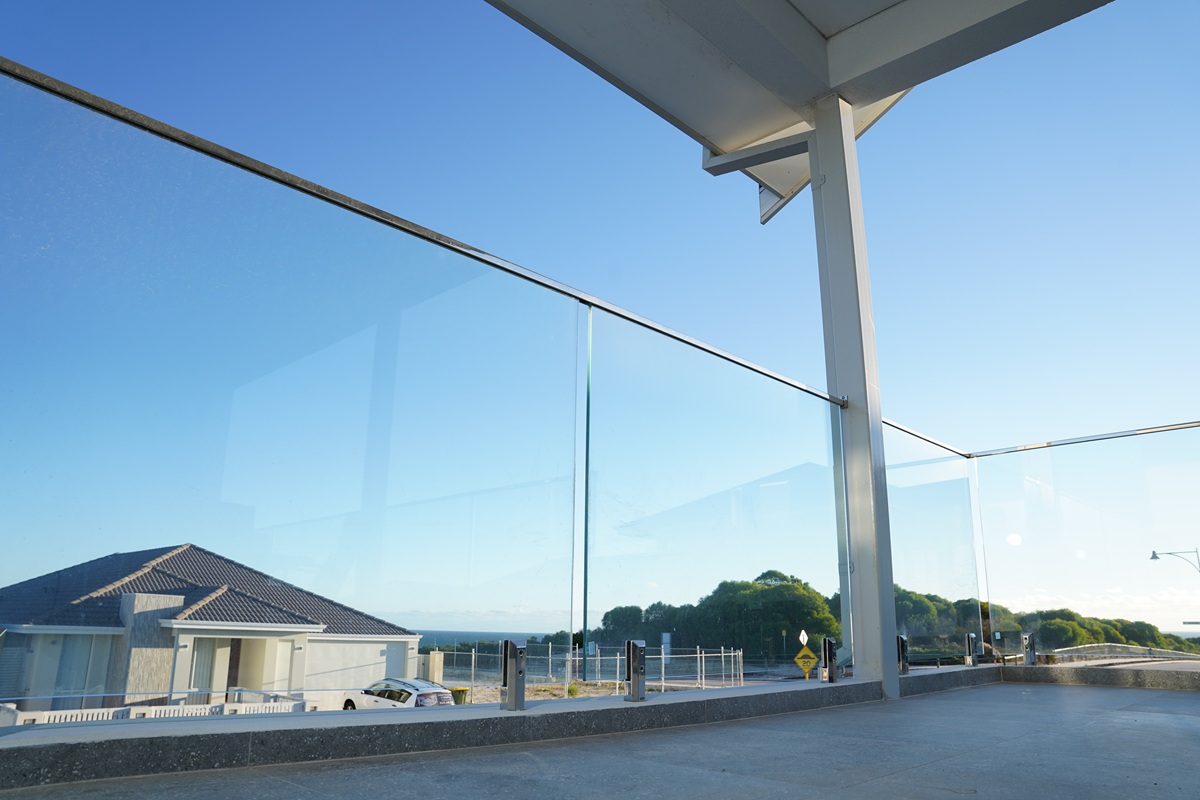
Glass balustrades are safety barriers made from toughened or laminated glass, designed for staircases, balconies, and elevated areas.
They’re fixed using engineered systems and built to meet Australian Standards, so they perform as a structural element, not just a visual one.
You’ll generally see them in three formats:
- Frameless, where the glass sits cleanly with minimal visible support
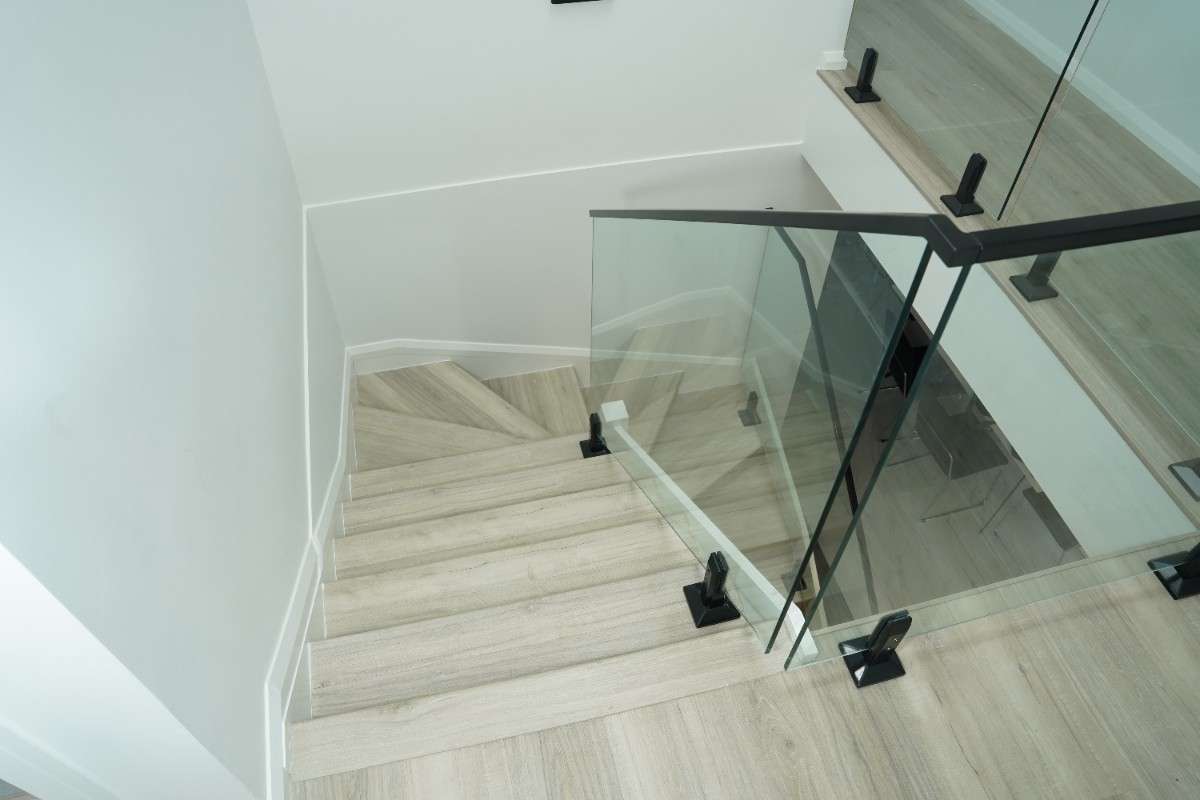
- Semi-frameless, which introduces a light structure around the panels
- Framed, where the balustrade becomes a more defined feature
Each option changes the look slightly, though the core benefit stays the same: maintaining openness while meeting safety requirements.
Why Choose Glass Balustrades?
When you’re comparing materials, the decision usually comes down to how the space will feel, function, and hold up over time.
So, why choose glass balustrades?
More Light, Less Interruption
One of the first things people notice is how glass changes the way light moves.
Instead of being blocked at each level, light carries through staircases and into adjoining spaces. Areas that would normally feel darker or closed in start to open up without needing structural changes.
This is often what leads people to ask this question in the first place. It’s a small design decision that has a wider impact on the whole home.
A More Open Feel Without Losing Structure
Glass doesn’t remove boundaries, but it softens them.
You still have a clear separation between levels for safety, though it doesn’t feel as enclosed. The space remains defined, just without the visual weight that comes with solid materials.
In tighter layouts, this can make a noticeable difference. In larger homes, it helps maintain a sense of connection rather than breaking areas apart.
A Finish That Works With Everything Around It
Some materials ask to be noticed. Glass tends to step back.
It allows other elements to carry the design, whether that’s timber treads, double stringers, or surrounding finishes. The result feels more balanced because you’re not layering competing materials in the same space.
Clear Sightlines Where It Counts
With glass, you’re not working around posts, cables, or solid panels. The view stays uninterrupted.
That can change how a space functions just as much as how it looks. It keeps lines of sight open across living areas, between levels, and out toward outdoor spaces.
In areas like balconies or pool surrounds, that visibility also adds a practical benefit.
Built for Everyday Use
Glass balustrades are designed for structural performance. The panels are toughened to handle regular use, impact, and load.
They also avoid the gradual issues that come with other materials. There’s no movement from moisture, no corrosion over time, and no risk of pest damage.
Once installed, they tend to hold both their form and finish with very little change.
Maintenance That Stays Simple
Maintenance tends to become more important once you’ve lived with a material for a while.
Glass keeps things straightforward. There’s no repainting or sealing to stay on top of. A simple clean when needed is usually enough to keep it looking clear.
Flexible Enough for Different Designs
Glass is also adaptable. The same material can be detailed in different ways depending on the look you’re after.
- Frameless systems create a near-invisible edge
- Semi-frameless options introduce more structure
- Handrails in timber or stainless steel shift the overall finish
This flexibility allows glass to work across a wide range of homes without feeling repetitive.
Glass vs Other Balustrade Materials
Looking at alternative materials can make it easier to understand where each option works and where limitations start to show over time.
Powder Coated Balustrades
Powder-coated balustrades offer a durable, structured finish and are commonly used in both residential and commercial settings.
Over time, however, surface wear can become more noticeable, particularly in high-traffic areas. Chips, scratches, or fading may require touch-ups or recoating to maintain a consistent appearance.
Steel Balustrades
Steel is widely used for its strength and structural reliability. It’s a practical choice in many applications, particularly where a more defined or industrial look is part of the design.
In more open or light-focused spaces, it can feel visually heavy. Depending on the environment, protective finishes may also be required to manage long-term exposure.
Wire Balustrades
Wire systems offer a minimal aesthetic and are often used where a lighter structure is preferred.
They introduce horizontal lines that can interrupt sightlines, particularly across staircases or balconies. Over time, cables may also require adjustment to maintain correct tension and spacing.
Indoor and Outdoor Applications
Inside the Home
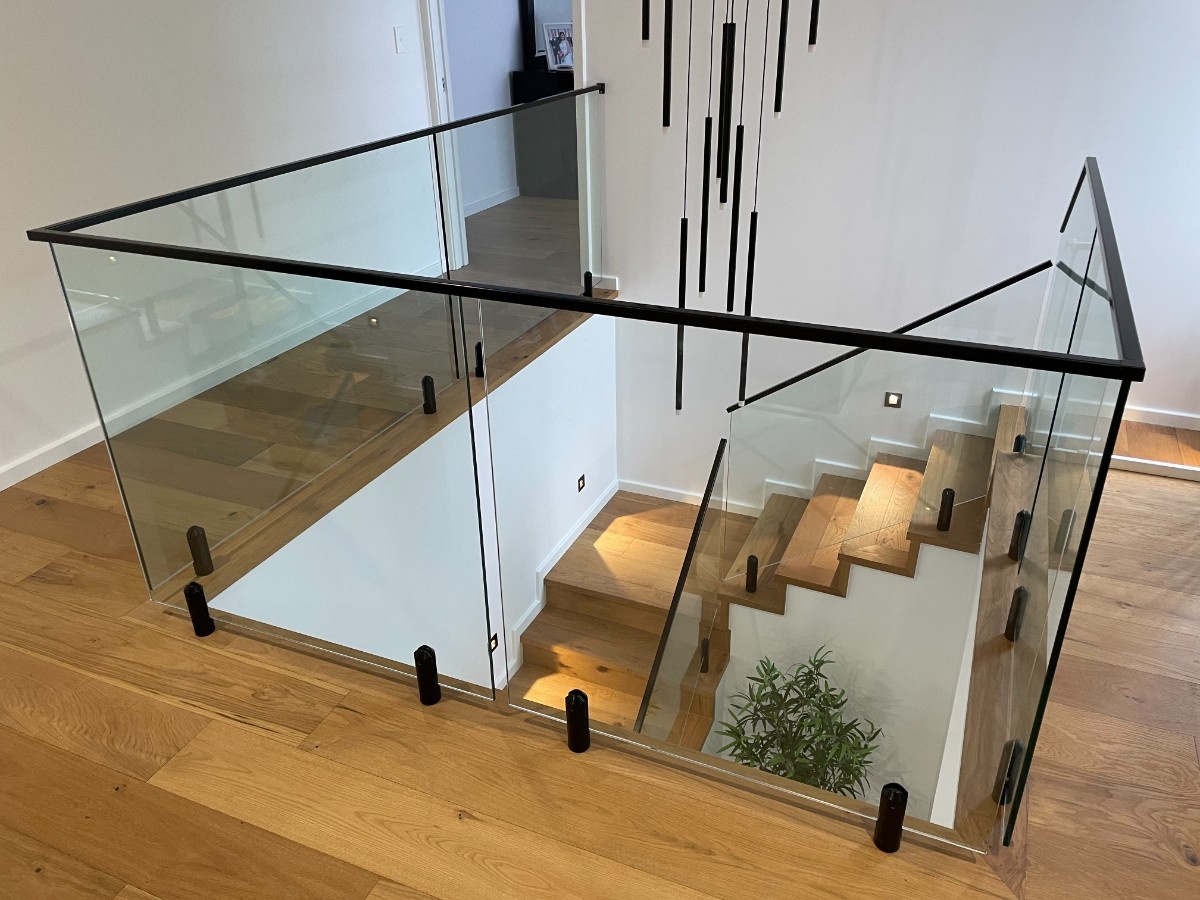
Glass balustrades are commonly used on staircases and voids to maintain flow between levels.
They allow light to pass through and help the staircase feel integrated into the space, rather than separate from it.
Outside the Home
Glass is equally suited to outdoor areas like balconies, pool fencing, and alfresco spaces.
It provides a secure barrier while keeping views open, and it performs well in exposed conditions without the same level of wear seen in other materials.
Safety and Compliance
Safety sits behind every balustrade system.
All glass balustrade installations must be certified to AS 1288:2021, with fixings engineered to resist the wind pressures and live loads defined in the National Construction Code (NCC). This includes meeting the 1.0m minimum height requirement and ensuring no gaps exceed the 125mm sphere rule to prevent climbing or falls.
When properly designed and installed, they provide a reliable barrier for both residential and commercial use.
Common Misconceptions
Before ruling glass in or out, it’s worth clearing up a few common assumptions that tend to influence the decision early.
Glass is fragile
Our balustrades are engineered from Grade A Toughened Safety Glass, a material specifically treated to withstand five times the impact of standard glass. To ensure your project is fully compliant, every system is load-tested to AS/NZS 1170.1 standards; meaning it is mathematically proven to handle the pressure of people leaning, pushing, or high-traffic use in both homes and commercial spaces.
Glass is hard to maintain
In practice, glass is one of the easier materials to manage. It doesn’t require repainting, sealing, or ongoing treatment. A simple cleaning with water and a soft cloth is usually enough to keep it looking clear, even in high-use areas.
Glass only suits modern homes
Glass is often associated with contemporary design, though it’s more versatile than that. It can be paired with timber, steel, or other materials to suit a wide range of styles, including more traditional homes where a lighter visual finish is preferred.
When Glass May Not Be the Right Fit
Glass suits most modern homes, though there are situations where another material may be more appropriate.
Spaces that require more privacy, or designs that lean heavily toward tradition, may call for a different approach. In some cases, a solid barrier may better suit the overall look.
A Considered Choice for Modern Homes
For many homeowners and builders, it often comes back to one question: why choose glass balustrades?
They improve how light moves, keep spaces feeling open, and require minimal upkeep over time. At the same time, they meet strict safety requirements and integrate easily with other materials.
That combination is what keeps them a consistent choice across new builds and renovations.
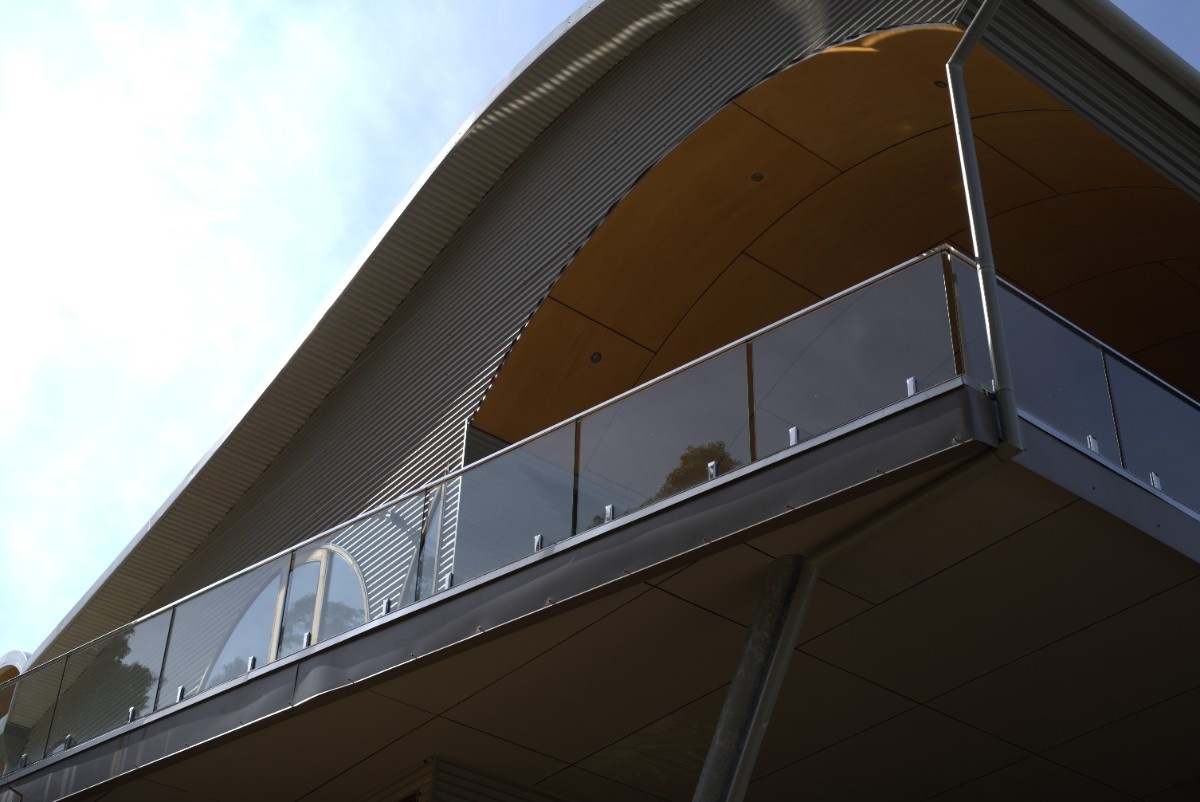
Explore Glass Balustrade Options with Aussie Stairs
Choosing the right balustrade comes down to how you want your space to look, feel, and perform over time.
Aussie Stairs designs and manufactures custom glass balustrades tailored to Australian homes, with every system engineered to AS/NZS 1288 and AS/NZS 1170.1 standards. With over 400 five-star reviews, our reputation is built on delivering structural safety without compromising on style.
Don't just take our word for it; experience the quality firsthand. Drop into our Maddington showroom to feel the weight of our Grade A Toughened Glass and compare finishes in person. It’s the fastest way to get total clarity on your project and see exactly how our engineering fits your vision.
Ready to get started? Call our team today for straightforward advice and a quote that works for your space.
Frequently Asked Questions
How long do glass balustrades typically last?
Glass balustrades are designed for long-term use. With proper installation and basic care, they can maintain their appearance and performance for decades without needing replacement.
Do glass balustrades work with existing staircases?
In many cases, yes. Glass balustrades can be integrated into existing stair structures, depending on the condition and design of the staircase. A site assessment is usually the best way to confirm what’s possible.
Will glass balustrades suit outdoor coastal areas?
Glass performs well in coastal environments because it isn’t affected by salt exposure in the same way some metals are. Hardware and fixings may still need to be selected carefully for those conditions.
Can glass balustrades be installed without a handrail?
This depends on the design and compliance requirements. Some frameless systems can be installed without a visible handrail, though this needs to be assessed against Australian Standards.
What happens if a glass panel is damaged?
Balustrade glass is designed to be strong, but if damage does occur, individual panels can typically be replaced without removing the entire system.


-min.jpeg)

.png)


.svg)