

Key Takeaways
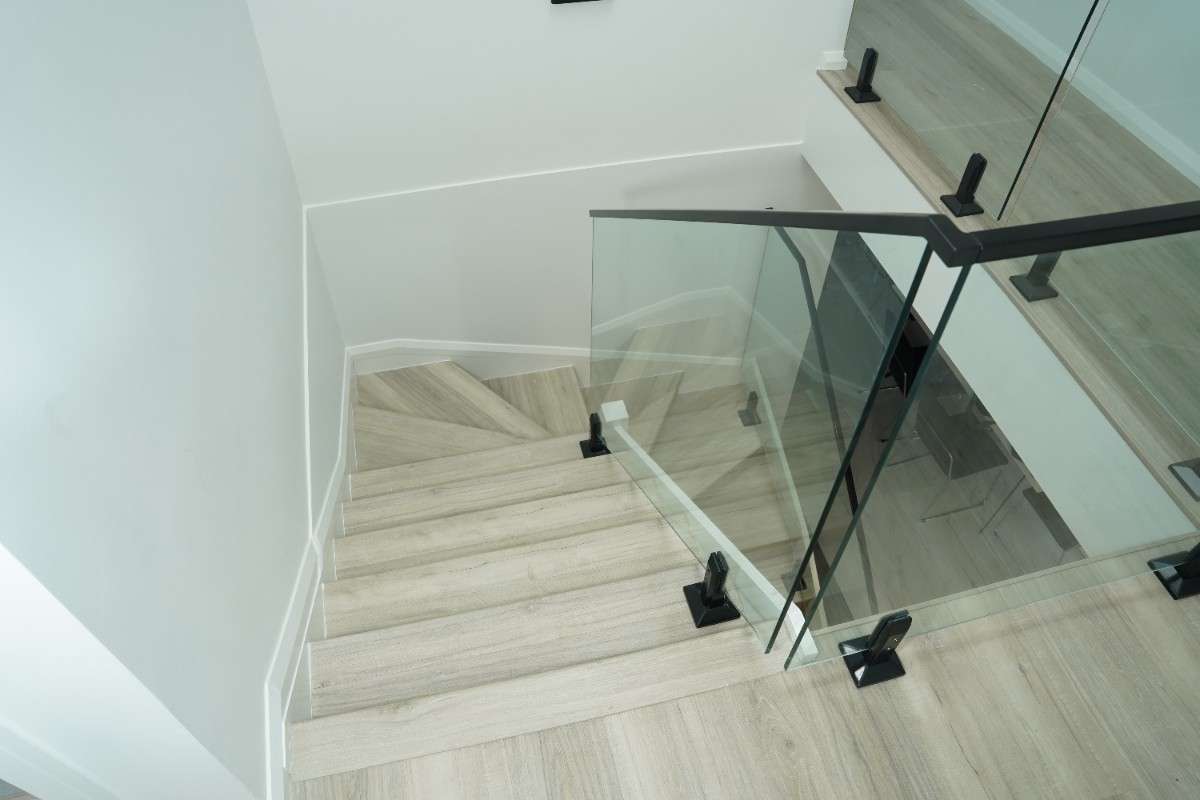
- There’s no single staircase price. A straightforward internal staircase can sit around $4,000 to $8,000 supplied and installed, while custom steel and floating designs can cost considerably more.
- The design choices you make have the biggest impact. Stair shape, materials, finishes and balustrade selection can change both the work involved and the final cost.
- Compare the full scope, not just the bottom line. Check what each quote includes, particularly the balustrade, handrail, delivery and installation.
- DIY can reduce installation costs, but it comes with responsibility. Accurate measuring, assembly, installation and compliance need to be factored into the decision.
- Compliance is easier to deal with early. Getting the stair geometry, structure and balustrade requirements right from the start can help avoid costly changes later.
It’s easy to put a rough figure against a staircase when you’re planning a build or renovation. The harder part is knowing whether that figure reflects the staircase you actually want.
A straightforward timber flight and a custom floating staircase may connect the same two floors, but the materials, fabrication and installation involved can be very different. That’s why staircase costs can vary considerably from one project to another.
Understanding what drives those differences will help you set a more realistic budget and know what to look for when comparing staircase quotes.
What Does a New Staircase Cost?
As a general guide, a standard internal staircase in Australia can cost around $4,000 to $8,000 supplied and installed, with custom steel and floating staircase designs and costs typically sitting at a higher price point.
These are general Australian price ranges rather than Aussie Stairs pricing. Aussie Stairs does not offer spiral or helical staircases.
What Affects Staircase Cost?
The final cost of a staircase comes down to more than its overall size. The design, materials, balustrade, site conditions and installation requirements all play a part in shaping the final price.
Staircase design and geometry
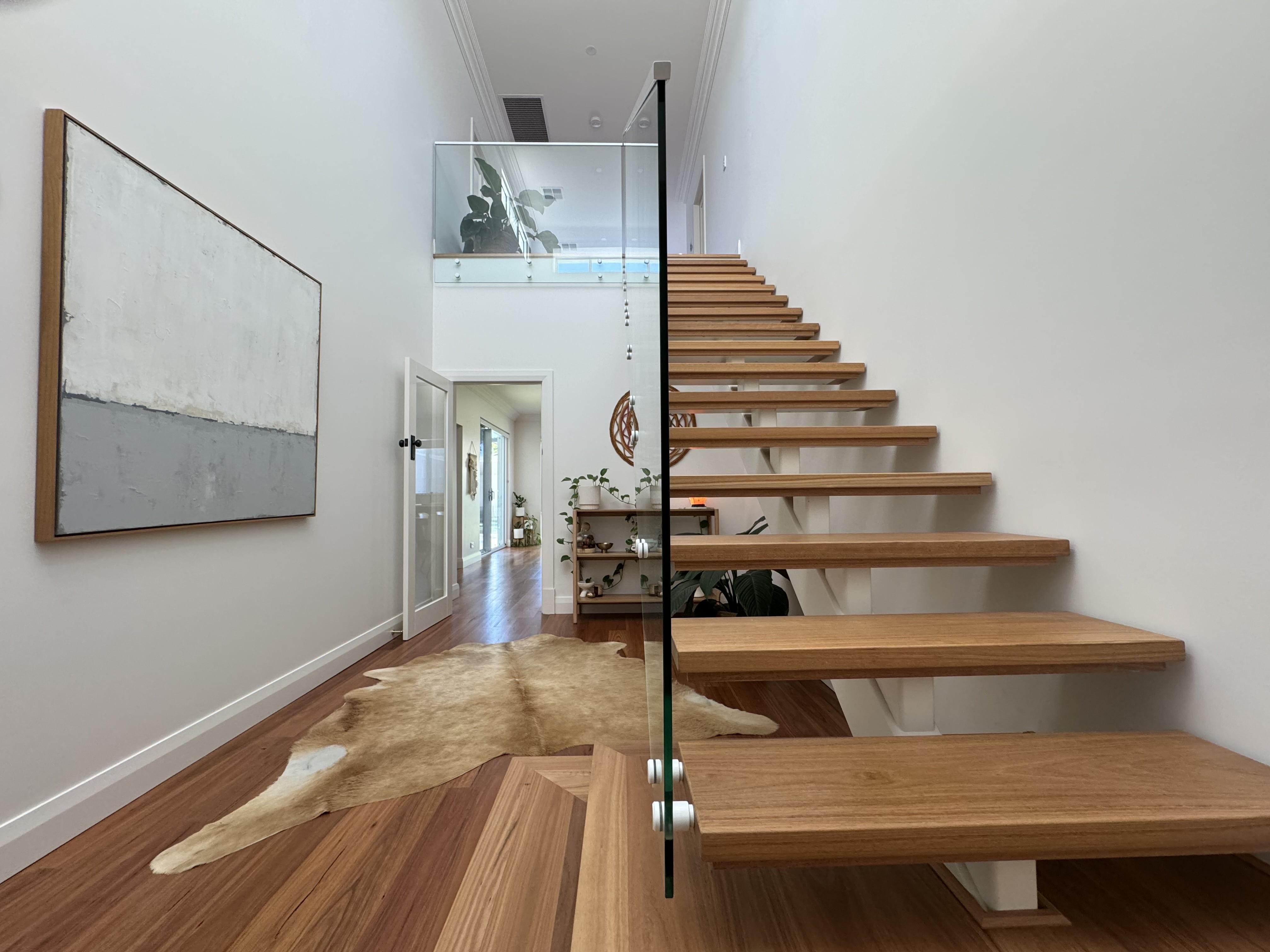
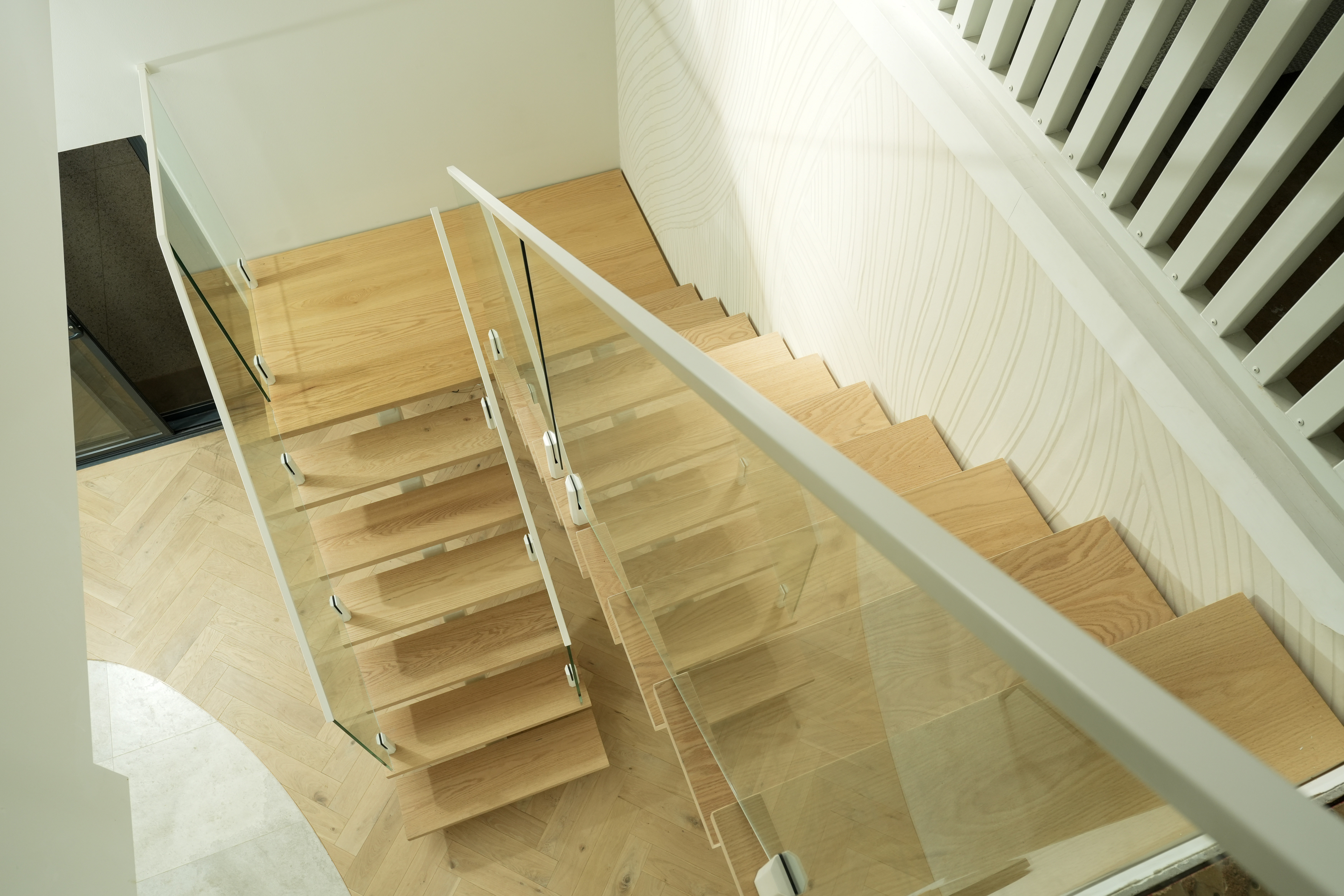
Straight staircases tend to be simpler to manufacture and install. Adding turns or landings introduces more structural and fabrication details, while floating and cantilevered stairs require further planning because much of the supporting structure is reduced or concealed.
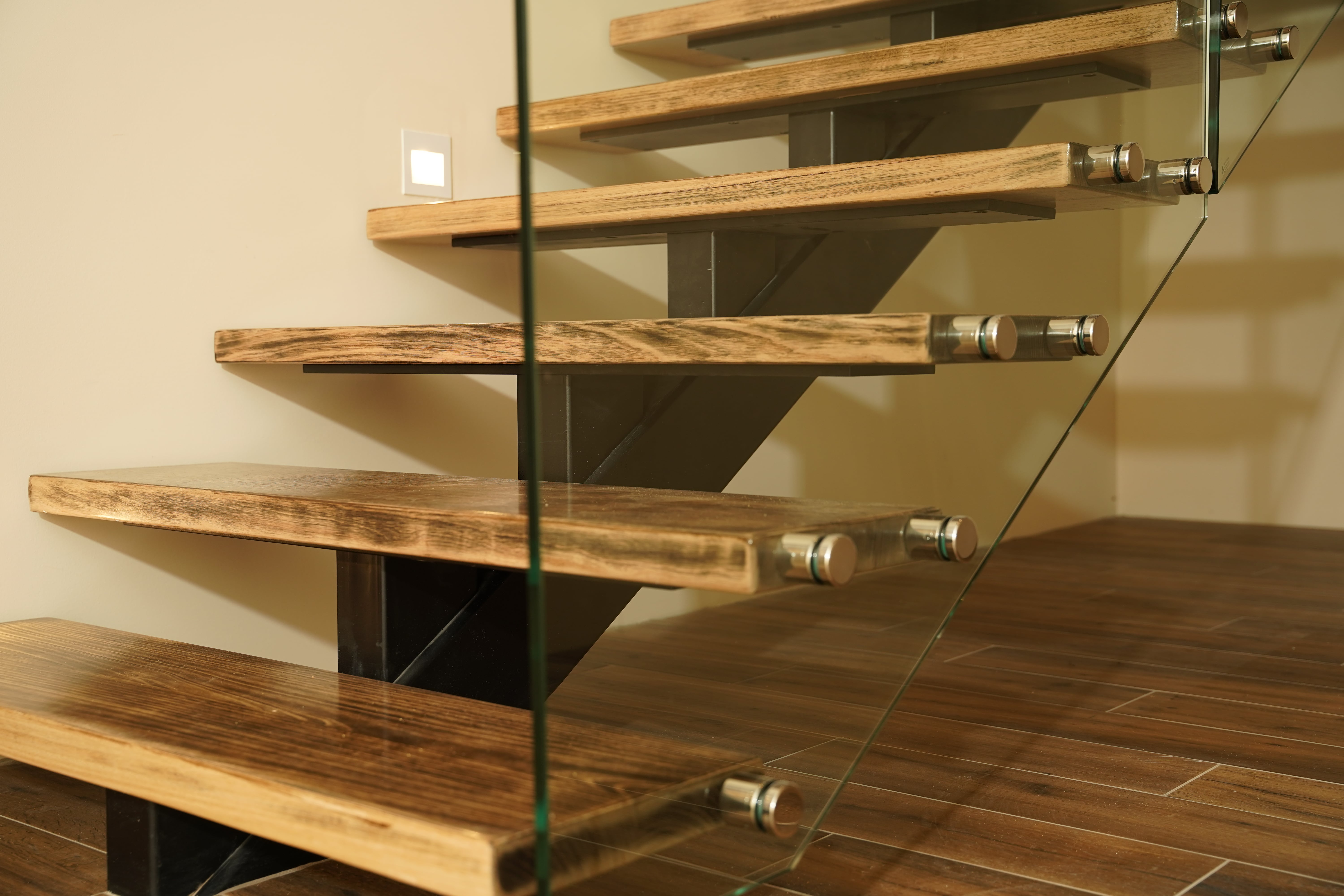
Steel designs such as a single spine staircase, or even a double, also involve custom fabrication, with the stringer configuration and chosen finish contributing to the cost.
Floor-to-floor height is another factor. Taller spaces generally require a larger staircase, increasing the amount of material required and potentially the length of balustrade.
Materials and finishes
Material choices affect both the look of your staircase and the work involved in manufacturing and finishing it. The main considerations include:
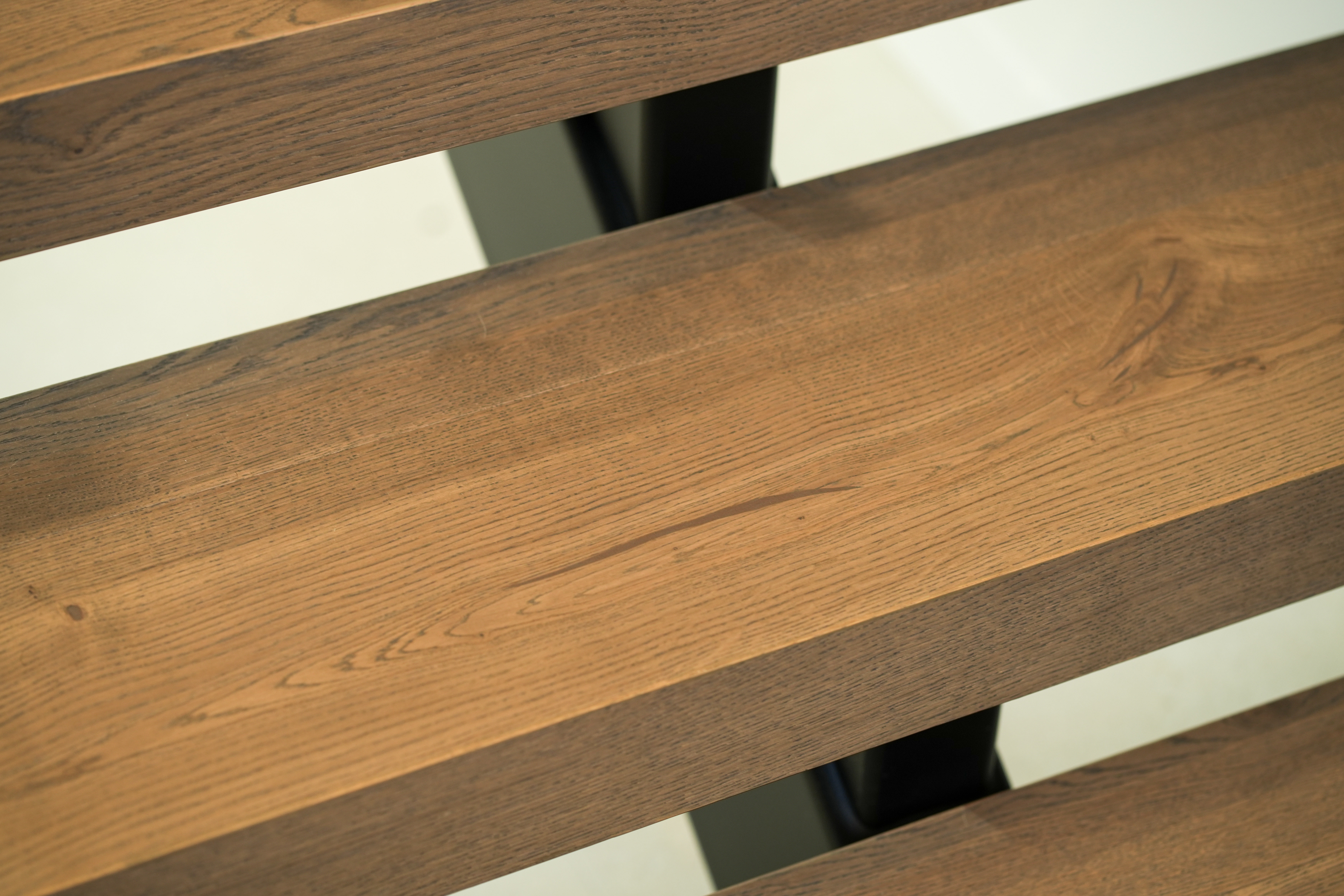
- Timber: The species and thickness of the treads can influence material costs.
- Tread finish: Exposed timber generally requires more finishing than stairs that will eventually be covered with carpet.
- Steelwork: The stringer design, fabrication requirements and chosen finish all contribute to the steel staircase cost.

Balustrades and handrails
Balustrades and handrails can make a noticeable difference to the overall staircase price, particularly when they continue around a landing or open void. The material and style you choose will also affect the finished look of the staircase.
Common options include:
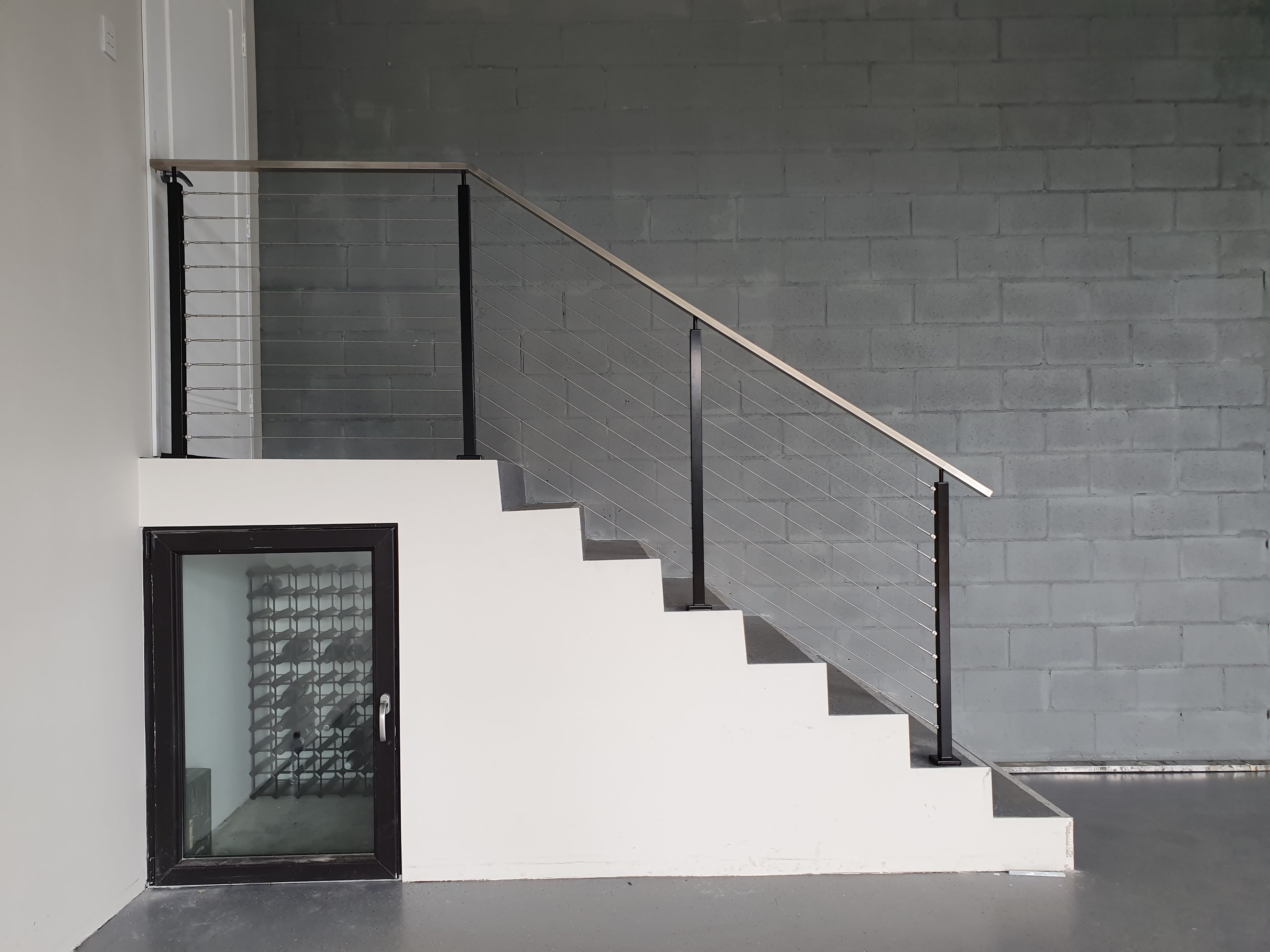
- Powder-coated balustrades: Work particularly well with steel staircase components and handrails.
- Wire balustrades: Maintain open sightlines across stairs and landings.
- Glass balustrades: Provide an open appearance, with frameless and semi-frameless options creating different levels of visible structure.
The fixing method also affects how the balustrade connects to the stair structure, so it is worth considering your preferred option as part of the overall staircase design.
Site access and installation
Site access can affect the time and work involved in installing a staircase, particularly when working within an existing home. A few conditions can make the job more involved:
- Limited access: Large staircase components can be harder to manoeuvre through an established home.
- Finished surfaces: Existing floors, walls and other finishes may need protection during installation.
- Other work on site: Installation may need to be coordinated around builders and other trades.
- Structural preparation: Additional work may be needed before the staircase can be installed.
New builds often provide easier access because staircase components can be brought inside before surrounding walls and finishes are complete. By comparison, replacing or relocating an existing staircase may involve additional structural and finishing work.
These factors can make the cost of replacing a staircase in an older home quite different from installing stairs in a new build.
What Does Compliance Mean for Your Staircase?
Cost isn’t the only consideration when designing a staircase. Australian staircases also need to meet the relevant requirements of the National Construction Code and applicable Australian stair standards, including requirements around headroom, handrails and structural safety.
AS 1657 is more commonly relevant to fixed platforms, walkways and access stairs in commercial, industrial and service environments.
Considering these requirements early in the design process can help avoid changes or rework later.
Can a DIY Stair Kit Save You Money?
For experienced owner-builders, a DIY stair kit can reduce installation costs by allowing you to supply your own labour. The staircase components and installation information are provided, while the assembly and installation are left to you.
Before choosing the DIY path, make sure you are comfortable with:
- Taking accurate site measurements
- Assembling and fixing the staircase correctly
- Using the required tools
- Following the installation information provided
- Making sure the finished staircase meets the requirements that apply to your project
What Should You Compare in a Staircase Quote?
When comparing staircase quotes, look beyond the final figure and check that each one covers a similar scope of work. This makes it easier to understand where any differences in price are coming from.
Check whether the quote includes:
- The staircase structure
- Treads and finishes
- The balustrade and handrail
- Delivery
- Installation
- Relevant engineering or documentation
- Any work required around the installation area
Quality, finish and compliance are also worth considering alongside price. If additional work, repairs or changes are needed later, they can add to the overall cost of the staircase.
Get an Accurate Staircase Quote for Your Home
Ready to get a clearer idea of what your staircase cost will be? Aussie Stairs can quote your project based on your design, dimensions and site requirements.
With more than 400 five-star Google reviews, our team designs, manufactures and installs custom staircases, balustrades and handrails.
Visit our Maddington showroom to see materials and finishes in person, or request a quote to get your project started.
Frequently Asked Questions
Can you give me a staircase price over the phone?
A phone conversation with Aussie Stairs can help with early budgeting, but we’ll usually need more information before we can provide an accurate quote. Your staircase design, dimensions and site conditions all help us determine the scope of the project, particularly for custom designs where floating staircase costs can vary considerably.
What information do you need to quote a staircase?
Plans or sketches are a useful starting point, along with relevant measurements and photos of the site. These details help us understand the staircase layout, dimensions and surrounding space so we can establish the project scope and prepare an accurate quote.
Can I supply my own staircase measurements?
Yes, particularly if you are considering a DIY Stair Kit. Measurements need to be accurate, as they help determine the staircase dimensions and configuration. For more complex projects, additional information or a site measure may be required before the design is finalised.
Can I install a staircase myself?
DIY installation can be an option for experienced owner-builders looking to reduce their staircase installation cost by supplying their own labour. You’ll need the right tools and practical skills, and be comfortable assembling and fixing the staircase correctly while making sure the finished installation meets the requirements that apply to your project.
Can I see staircase materials and finishes before choosing?
Yes. Visiting the Aussie Stairs showroom in Maddington gives you the opportunity to see staircase, balustrade and handrail options in person before making your final selections.




.svg)