

-min.jpeg)
Summary:
- Straight, L-shaped, floating, spiral, curved, and helical stairs each suit different layouts and architectural styles.
- Your floor-to-floor height and available footprint will often determine which staircase design ideas are practical.
- Material selection, balustrade choice, and fabrication complexity are the biggest cost drivers.
- Floating staircase designs remain one of the most popular choices for modern Australian homes.
- Early planning helps avoid delays with engineering, fabrication, and installation.
- Working with an experienced staircase specialist helps ensure the design is compliant, practical, and properly integrated into the build.
We are custom staircase and balustrade specialists with more than 400 five-star Google reviews, and this guide provides a general overview of staircase design idea considerations across Australian residential and commercial projects.
Requirements can vary depending on the building type, structural conditions, site constraints, and applicable compliance standards. Confirming project requirements early helps reduce redesigns, delays, and installation issues later in the build.
If you are unsure which staircase design ideas are best suited to your project, our team can assist with planning, design guidance, and compliance considerations before fabrication begins.
Staircases shape how people move through homes, commercial spaces, and multi-level buildings. Beyond connecting two levels, they influence circulation, structural planning, visual flow, and how a space functions day to day.
What often seems like a straightforward design decision quickly becomes more involved once layout constraints, materials, compliance, engineering, and installation sequencing enter the conversation. The right staircase design ideas need to balance practical performance with architectural intent while fitting the way the space will actually be used.
In Australia, staircase design is shaped by the National Construction Code alongside the relevant Australian Standards governing safety, structural performance, and stair geometry. Understanding how staircase design ideas work in practice makes it easier to compare options confidently, avoid costly compromises, and plan your project more effectively from the outset.
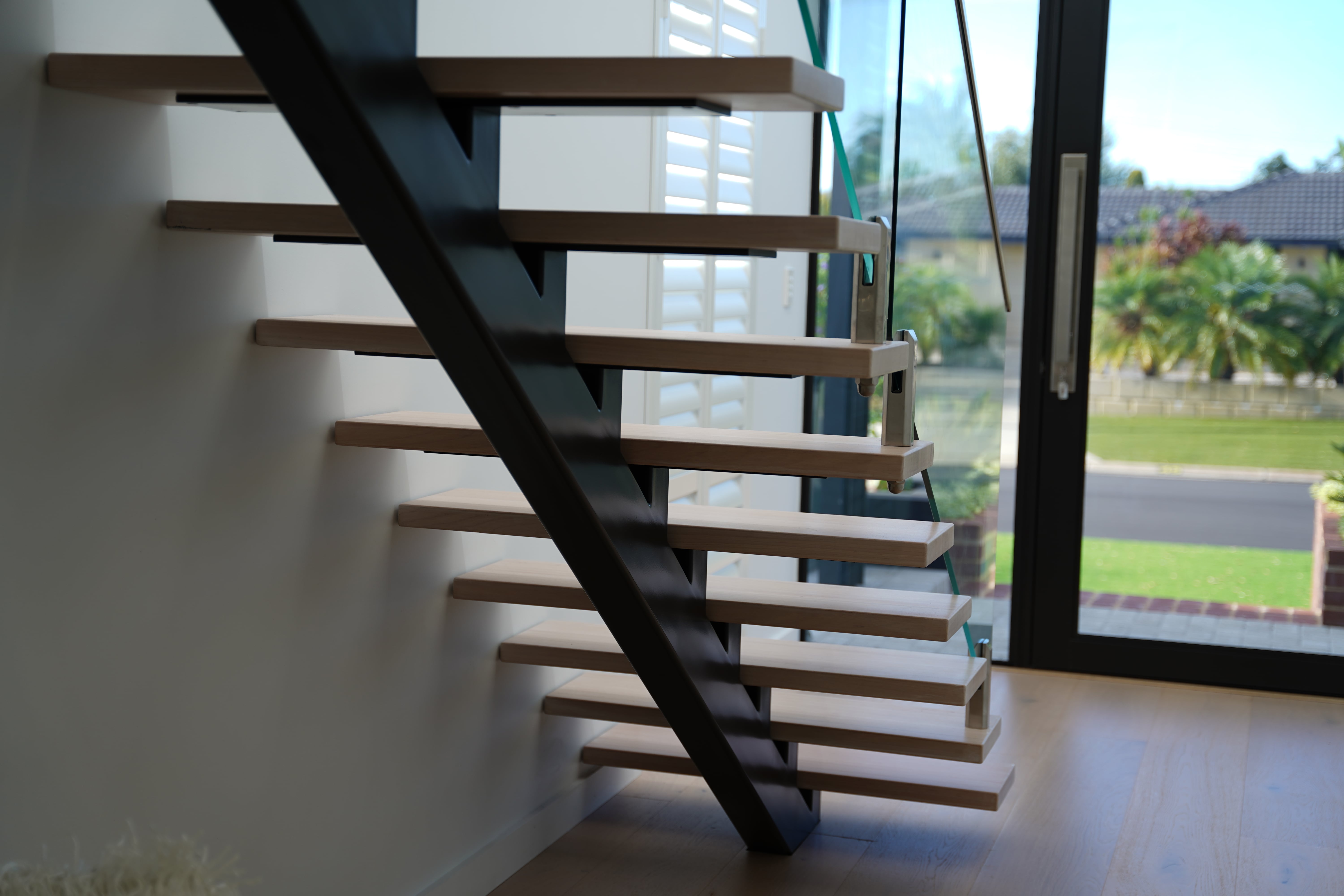
The Main Staircase Designs in Australia
Different staircase layouts solve different spatial and structural challenges. Some are wdesigned to maximise efficiency within compact floor plans, while others prioritise architectural impact or flexibility across larger spaces.
The most suitable staircase design ideas depend on the available footprint, intended use, and the degree of visual prominence the staircase should have within the project.
Knowing how each layout works in practice makes it easier to narrow down which options are realistic before moving into materials, finishes, and engineering considerations.
Straight Stairs
Straight stairs remain one of the most widely used staircase layouts in Australian residential and commercial projects because of their simplicity and adaptability.
The staircase runs in a single uninterrupted flight without turns or intermediate landings, making the geometry relatively straightforward compared to more complex configurations.
Straight stairs are especially common in:
- Family homes
- Simple floor plans
- Offices and commercial fit-outs
- Projects with sufficient uninterrupted floor space
Straight stairs also tend to work well for everyday circulation. Navigation feels intuitive, furniture movement is generally easier, and the layout integrates comfortably into both contemporary and traditional spaces.
The main limitation is the footprint. Straight stairs require the longest uninterrupted run of any staircase layout.
L-Shaped Stairs
L-shaped stairs introduce a 90-degree turn at a landing, dividing the staircase into two shorter flights.
This configuration often uses floor space more efficiently than a straight stair while creating a more defined transition between levels. Changing direction helps the staircase feel more contained within the floor plan. The landing can also improve circulation and practicality in busier environments.
L-shaped stairs are commonly used in:
- Open-plan homes
- Corner layouts
- Compact floor plans
- Family homes
- Multi-residential projects
U-Shaped Stairs
U-shaped stairs use two parallel stair flights connected by a 180-degree landing, allowing the staircase to double back on itself. This arrangement reduces the amount of linear floor space required while creating a stronger design presence.
They often work well where the staircase is intended to become a more visible part of the overall layout. The configuration does, however, require careful coordination around circulation zones and upper-floor landings.
This style is commonly used in:
- Townhouses
- Narrower homes
- Double-height entries
- Hospitality spaces
- Commercial and multi-residential projects
Floating Stairs
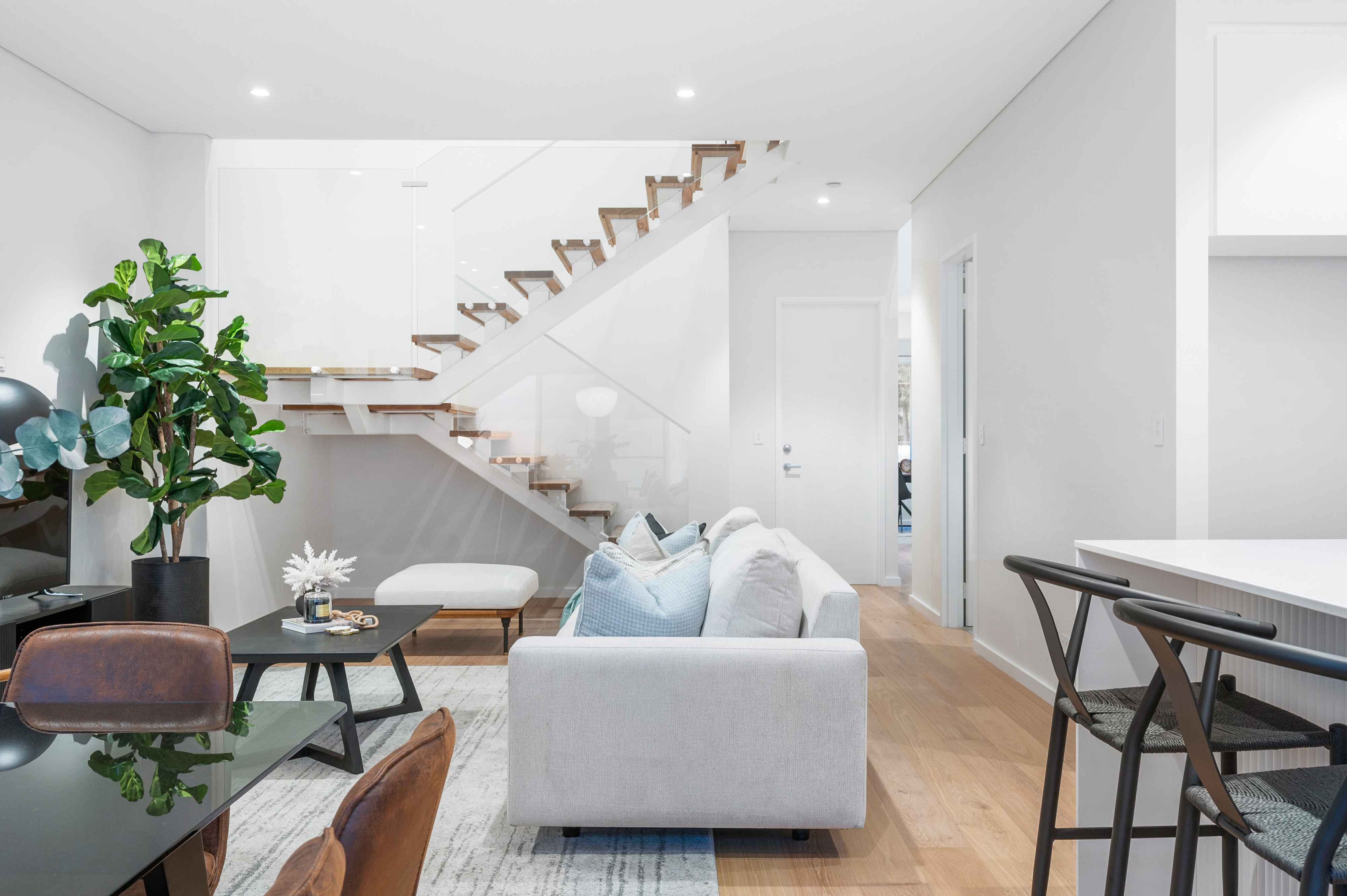
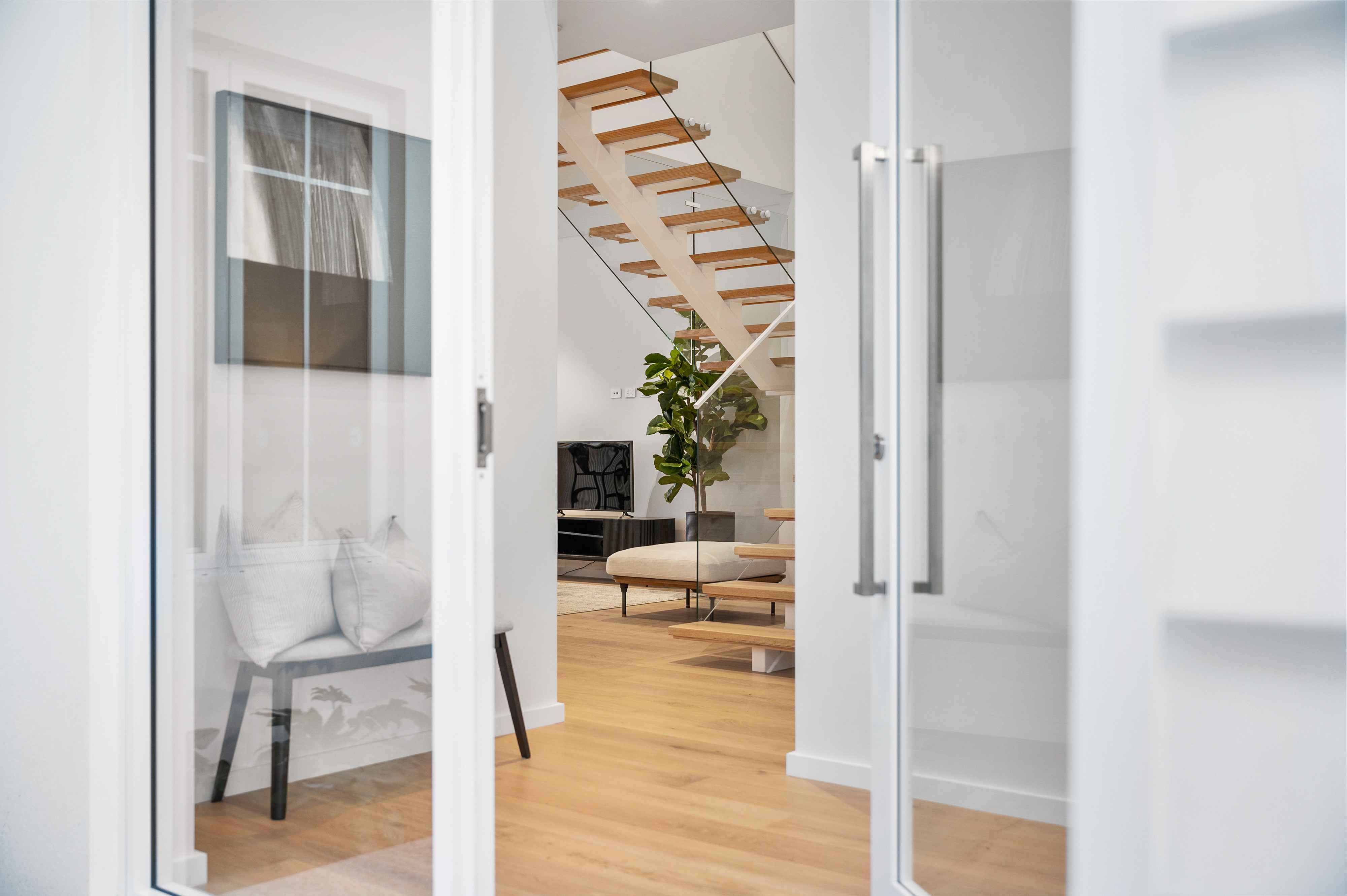
Floating stairs, also known as cantilever stairs, remain one of the most requested styles in contemporary Australian projects. The treads appear suspended with minimal visible structural support, creating a more refined appearance. They are commonly paired with timber treads, frameless glass balustrades, steel spine structures, and minimalist handrails.
Often, they can be found in open-plan homes, renovations, showrooms, and premium commercial interiors.
Behind the simplified appearance is a more involved structural process. Depending on the design, part of the support system may sit inside the wall, connect directly into the slab, or rely on concealed steel reinforcement resolved early in the build. Because of that, floating stairs generally require closer coordination between engineering, fabrication, and surrounding construction works than more conventional staircase layouts.
Spiral Stairs
Spiral stairs rotate around a central column, making them the most compact staircase design available. They work best where floor space is limited or where the staircase provides secondary access rather than serving as the main stair in the home.
They work particularly well in:
- Loft spaces
- Rooftop access
- Studios
- Outdoor access stairs
- Warehouse mezzanines
- Secondary commercial access
The compact footprint is the primary advantage. In smaller spaces, a spiral staircase can solve layout constraints that other staircase designs cannot accommodate efficiently.
The trade-off is practicality. Spiral stairs are generally less comfortable for frequent everyday use, and moving larger furniture through the staircase can become difficult because of the tighter geometry.
Curved and Helical Stairs
Curved and helical stairs are designed to create a strong statement.
A helical staircase curves around an open void without a central column, while curved stairs typically follow a broader sweeping arc. Both designs create a softer and more sculptural feel than angular staircase layouts.
They are often suited to:
- Luxury homes
- Prestige renovations
- Feature entry spaces
- Hospitality environments
- Detail-driven commercial projects
These types of stairway designs require a far higher level of custom fabrication than conventional staircase layouts. The geometry, structural coordination, and installation tolerances are significantly more complex, which usually results in longer lead times and earlier planning requirements within the build process.

Choosing the Right Staircase Layout for Your Space
Once the main staircase design idea becomes clearer, the next step is understanding what will realistically fit within the available space.
In many projects, the floor plan itself quickly narrows your options. Ceiling height, circulation paths, surrounding rooms, and structural constraints all influence how much space the staircase can occupy and how comfortably it will function day to day.
Floor-to-Floor Height
Floor-to-floor height is usually one of the first limitations to consider because it directly affects the overall size of the staircase.
Higher floor levels generally mean:
- More treads
- Longer stair runs
- Larger landings
As the staircase becomes larger, the surrounding layout often needs to accommodate additional circulation space around the stair itself. In tighter homes and multi-residential projects, especially, even small changes in height can significantly affect how efficiently the staircase fits within the plan.
Available Footprint
The available footprint will often determine which staircase design idea is realistic within the project.
Straight stairs require the longest uninterrupted run, while L-shaped and U-shaped configurations tend to fit more comfortably into compact or segmented layouts. Spiral stairs occupy the smallest footprint of all major staircase types, though that space-saving advantage can come with compromises in everyday practicality and accessibility.
Open vs Closed Risers
The way a staircase feels within the space also changes depending on whether the risers are open or closed.
Open risers leave visibility between each tread, creating a lighter appearance that is commonly used in contemporary homes and commercial interiors. Closed risers fully enclose the staircase between steps, resulting in a more solid and traditional look while concealing the space beneath each tread.
Both approaches can work across most staircase layouts, so the decision usually comes down to the overall architectural direction and how visually connected the staircase should feel to the surrounding space.
Indoor vs Outdoor Stairs
Indoor and outdoor staircases operate under very different conditions, particularly in Australian environments.
Outdoor stairs require materials and finishes capable of handling long-term exposure to moisture, UV conditions, and temperature variation. Powder-coated steel, treated timber, and anti-slip surfaces are commonly used to improve long-term durability outdoors.
Indoor staircases generally allow greater flexibility with materials and detailing, particularly in climate-controlled spaces. In commercial projects and higher-traffic environments, durability, slip resistance, and long-term maintenance requirements also become more influential during material selection.

Matching Staircase Designs to Your Style
The most successful staircase design ideas feel integrated into the surrounding architecture rather than treated as a separate feature. Material selection, proportions, and structural detailing all influence how naturally the staircase sits within the space.
While functionality and layout shape what is planned, the style of the project usually determines how the staircase should look and feel once installed.
Modern and Contemporary Homes
Modern homes often suit floating staircase designs because they maintain cleaner lines throughout the space.
Steel structures, timber treads, frameless glass balustrades, and minimalist handrails are commonly paired in contemporary homes because they balance warmth with simplicity. Timber softens the harder lines of steel and glass, while open risers help the overall structure of the staircase within the room. In open-plan homes, especially, floating stairs can help spaces feel more open through the centre of the home.
Floating staircases align closely with the direction contemporary Australian residential design has been moving: open plan, light-filled, and oriented around visual flow between levels. If you are working with an architect or designer on a new build or major renovation, a cantilevered stair with frameless glass is likely already part of the brief.
Coastal and Hamptons Homes
Coastal and Hamptons-style homes generally favour lighter finishes, softer detailing, and natural textures.
Oak treads, white stringers, glass balustrades, and light timber handrails are commonly used in these homes because they create a softer and more relaxed finish throughout the space.
Straight and L-shaped stairs tend to work particularly well within these layouts because they feel understated rather than overly structural or visually dominant.
Industrial Homes
Industrial-style projects often expose structural elements rather than concealing them.
Black steel stairs, wire balustrades, open risers, and exposed steel detailing all complement warehouse-style interiors, hospitality spaces, and contemporary industrial homes. In these projects, the structure itself often becomes part of the visual identity of the staircase.
Traditional and Heritage Homes
Traditional homes generally favour more detailed joinery, enclosed forms, and stronger material warmth than contemporary staircase designs.
Common features include:
- Closed risers
- Detailed timber joinery
- Classic balustrade profiles
- Curved staircase layouts
Curved stairs can work especially well in formal entry areas where the staircase is intended to create a stronger sense of arrival.
Transitional Homes
Many Australian renovations combine contemporary finishes with warmer traditional materials. Floating stairs with timber treads and glass balustrades work particularly well here because they balance cleaner structural lines with natural texture.
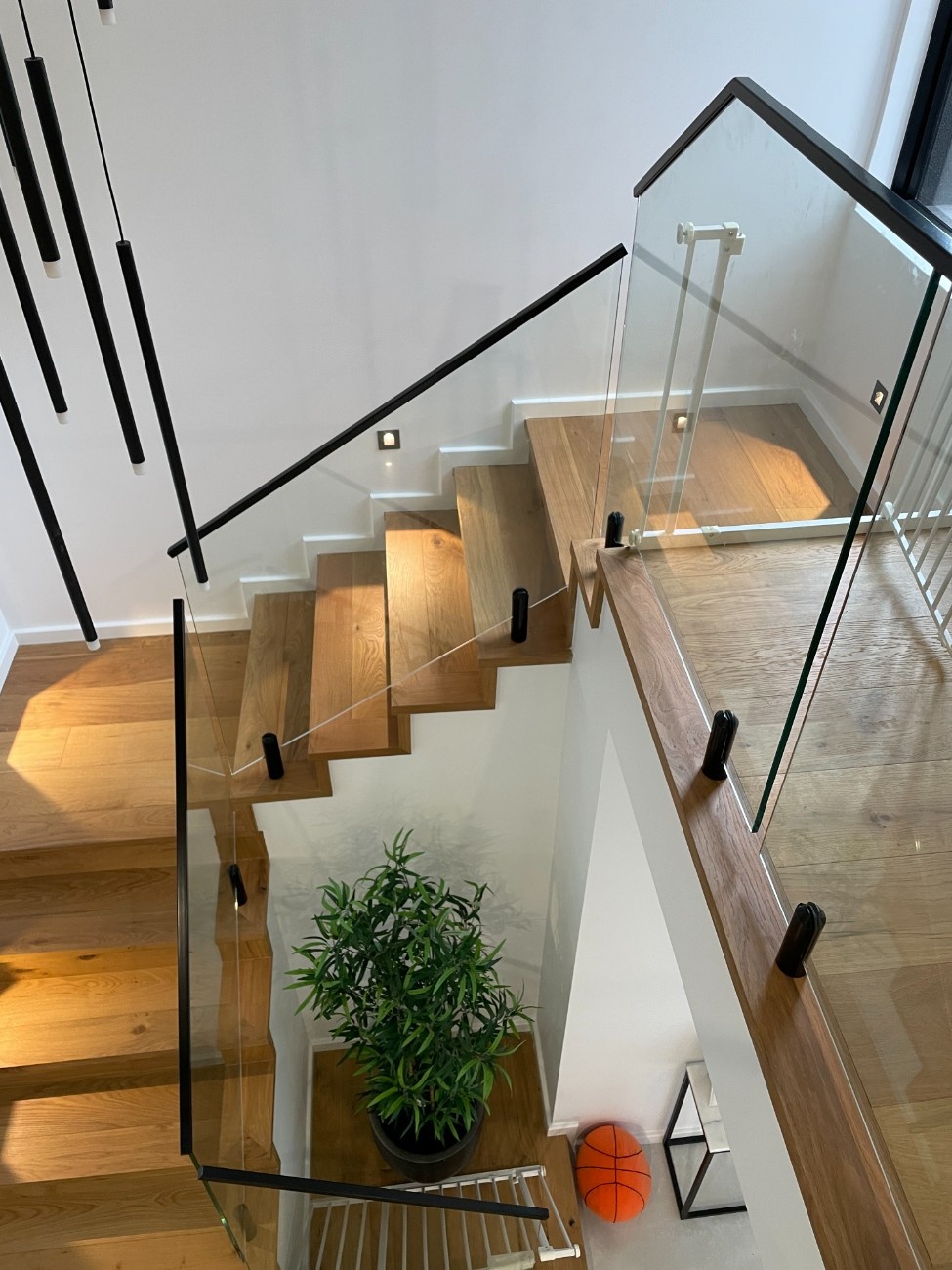
What Materials are Used in Custom Staircases?
The material choices you make shape not just how the staircase looks, but how it performs over decades of daily use. Understanding the main options makes it easier to match the material to the design intent, the architectural style, and the available budget.
Structural Steel
Steel is the backbone of most custom floating staircases in Australia. It is used for the central spine, the supporting frame, and in many cases, the treads themselves. Structural steel allows for the long spans and precise load distribution that cantilevered designs require, and it can be fabricated to tolerances that timber cannot match.
All structural steel is locally fabricated to specification rather than sourced from overseas flat-pack systems. Mild steel is standard for most residential applications and is powder-coated on completion, providing durability, UV resistance, and a consistent finish. For coastal environments or projects with specific corrosion requirements, marine-grade or galvanised options are available.
Timber Treads
Timber remains the most popular tread choice in contemporary Australian residential staircases. It is warm underfoot, visually versatile, and ages well when properly finished. The species you choose should take into account your floor finish, the natural light in the space, and the overall colour palette of the home.
Common species used in custom staircase projects include:
- Victorian ash: A pale, fine-grained hardwood that suits contemporary and coastal interiors. It takes stain well and remains widely used across a range of residential projects.
- Spotted gum: A denser hardwood with more natural variation through the grain. Commonly used in coastal and transitional homes where warmth and texture are a priority.
- Blackbutt: Hard-wearing, straight-grained, and neutral in tone. Its versatility makes it well-suited to both contemporary interiors and higher-traffic areas.
- American oak: A popular imported species with a consistent, open grain that works well in both natural and stained finishes and is commonly found in Hamptons and transitional style homes.
Glass Balustrades
Frameless glass balustrades are the most requested balustrade system for contemporary and floating staircase designs. They maintain visual openness, allow light to move freely between levels, and require minimal maintenance once installed.
The glass used in structural balustrade applications is toughened or laminated safety glass, required to comply with Australian Standard AS 1288. Frameless systems use thick panels fixed directly to the structure with point-fixed or channel-fixed bases, eliminating the need for visible posts or framing.
For a more budget-conscious alternative, semi-frameless systems use a slimline post at set intervals, maintaining much of the visual openness at a lower fabrication cost.
Wire and Cable Balustrades
Stainless steel wire balustrades suit industrial, coastal, and transitional styles particularly well. They are durable, low-maintenance, and provide a clean visual line without the full cost of frameless glass. In some council areas and for commercial applications, the spacing and tension of wire balustrades are subject to specific compliance requirements, so confirming this with your fabricator early is worthwhile.
Compliance: What You Need to Know
Staircase compliance in Australia is governed by requirements covering stair geometry, structural performance, balustrade safety, and handrail design. The key standard for most residential projects is AS 1657, which sets out the minimum and maximum dimensions for treads, risers, headroom, and balustrade heights.
For residential buildings, the NCC Class 1 provisions are most relevant. For commercial projects, Class 2 through Class 9 provisions apply and are generally more stringent, particularly around slip resistance, structural load ratings, and emergency egress requirements.
A reputable staircase fabricator should provide engineering drawings and documentation confirming compliance as part of the standard approval process. Where building permits are required, the completed staircase will typically be inspected before final sign-off.
If your project involves a structural engineer, Engineers Australia maintains a directory of registered practitioners. For commercial projects with workplace health and safety obligations, SafeWork Australia publishes guidance on slip resistance and staircase safety requirements for workplaces.
Before You Replace an Existing Staircase
Replacing rather than renovating is not always the right call. Work through these questions before committing either way.
Is the existing structure sound?
If the structural frame, bearers, and fixings are in good condition, replacing treads, risers, and balustrades can deliver a significant visual transformation at a fraction of the cost of a full replacement. Have a builder or structural engineer assess the frame before you decide.
Is the existing staircase compliant?
Older staircases, particularly in homes built before the 1990s, are often non-compliant with current NCC requirements: treads too shallow, risers too high, or balustrades too low. If a renovation would require bringing the entire staircase up to code, a full replacement often becomes the more cost-effective path.
Does the layout still work?
A renovation can change how a staircase looks, but it cannot change where it sits in the floor plan. If the current location creates circulation problems, limits natural light, or conflicts with how the rest of the home functions, a full replacement in a better location is worth considering.
What is the long-term intent?
If the home is being sold in the near future, a cost-effective renovation that improves visual presentation may deliver more value than a full custom replacement. If it is a long-term hold and the staircase will be used daily for decades, the investment in a custom replacement is easier to justify.
Can the existing structure support a new design?
If you are considering a floating staircase as the replacement design, the existing wall construction and slab type need to be assessed before anything else. Not every renovation site can support a cantilevered design without structural modification.
What Affects the Cost of a Staircase?
Staircase pricing can vary significantly from one project to the next because the cost is shaped by far more than the visible design alone.
Two staircases may appear similar while differing considerably in engineering requirements, fabrication complexity, materials, and installation planning. Understanding those differences early helps create more realistic expectations and reduces the risk of compromises later in the build.
Material Selection
Material selection is usually the first major cost consideration.
A straightforward timber staircase is generally more cost-effective than a fully engineered steel design, particularly in simpler layouts. Once steel structures, frameless glass balustrades, or custom finishes are introduced, fabrication becomes more specialised and installation tolerances become tighter.
Hybrid staircases combining steel structures with timber treads remain especially popular because they balance the overall appearance with practicality and durability.
In commercial and higher-traffic environments, material selection may also need to prioritise durability, slip resistance, and long-term maintenance requirements.
Staircase Complexity
The complexity of the staircase layout has a major influence on engineering, fabrication, and installation planning.
Straight stairs are generally more efficient to manufacture because the geometry is relatively simple. Floating, curved, and helical staircases require a far higher level of custom fabrication and early planning throughout the project.
Curved and helical stairs, in particular, often involve more detailed engineering, tighter installation tolerances, and longer fabrication timelines than conventional staircase layouts.
Balustrade Choice
Balustrades can influence overall project cost more than many people initially expect.
Frameless glass remains one of the most requested options in contemporary homes and commercial spaces, but it is also one of the more premium systems due to the engineered glass, specialised fixings, and installation precision involved.
Wire and powder-coated balustrades can offer greater budget flexibility while still achieving a clean and well-resolved finish.
Number of Treads
Higher floor levels generally require more treads, longer stair runs, and larger landings, all of which affect the staircase footprint and overall fabrication requirements.
Timing Within the Build
The timing of staircase planning can significantly affect both project efficiency and overall cost control.
When staircase design ideas are considered early, structural requirements, floor levels, finishes, and installation sequencing can usually be coordinated more effectively from the beginning.
Problems tend to appear when the staircase becomes a late-stage decision, particularly once structural openings and finished floor heights have already been locked in.
Common Staircase Planning Mistakes to Avoid
Many staircase issues begin long before fabrication starts.
Some of the most common problems include:
- Leaving staircase planning too late in the build
- Finalising floor finishes after fabrication drawings are approved
- Underestimating the structural requirements of floating stairs
- Overlooking lighting, access, and installation sequencing early in the project
Resolving these details earlier usually creates a smoother installation process and reduces the likelihood of redesigns or site delays later in the build.
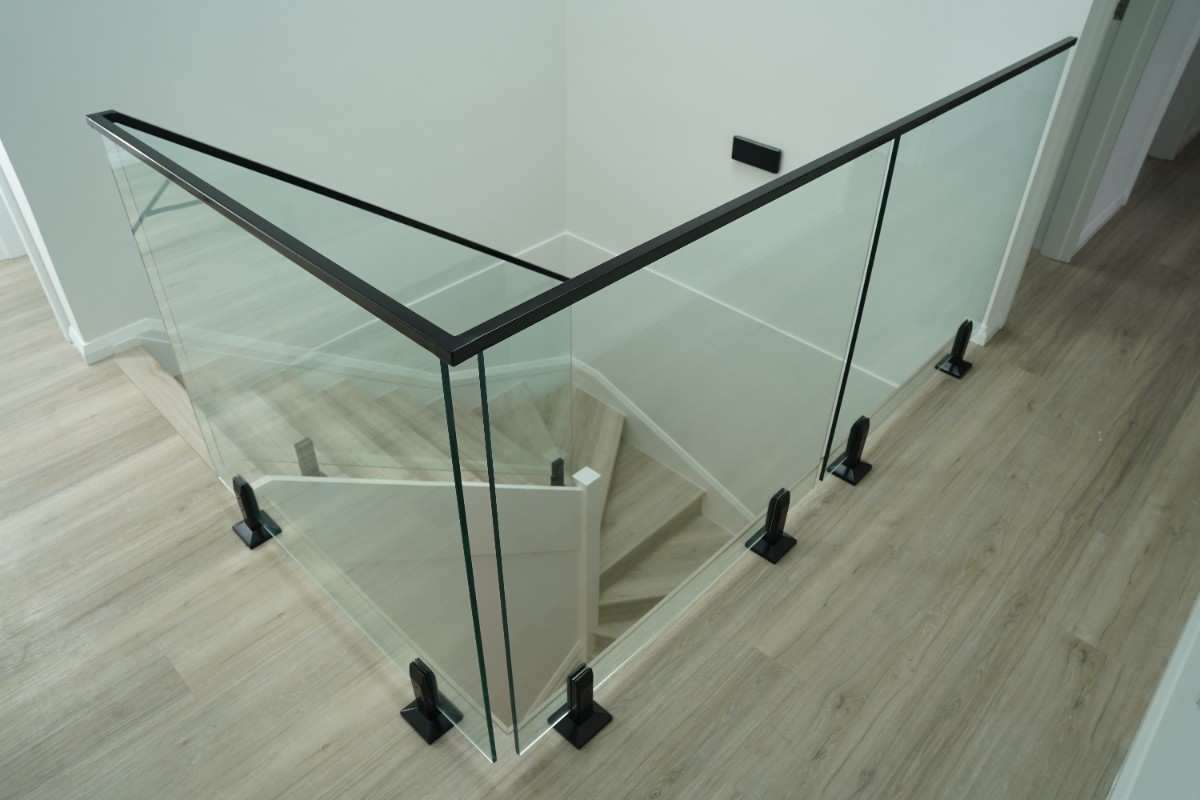
What to Measure Before Requesting a Quote
You do not need every detail finalised before speaking with a staircase specialist, but having a few key measurements ready will make the initial guidance far more accurate.
The key measurements you’ll want include:
- Floor-to-floor height
- Available stair footprint
- Staircase width
- Headroom clearance
- Wall construction type
- Slab or floor structure type
Plans, inspiration images, and site photos can also help clarify layout constraints and design direction early in the process.
For floating staircase designs, especially, wall construction becomes particularly important because part of the structural support may sit within the wall itself. Resolving these details early helps avoid redesigns later once engineering and fabrication begin.
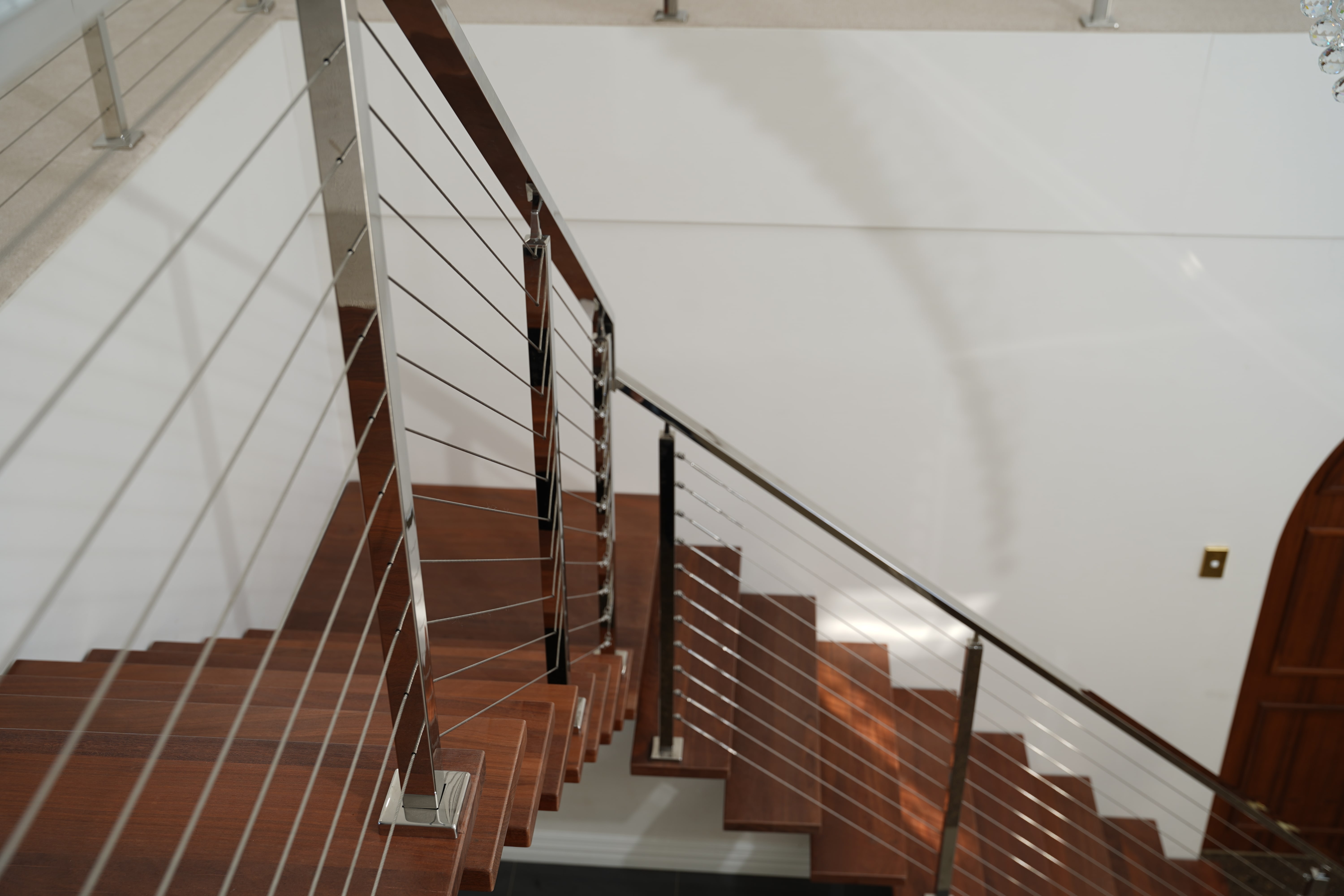
What to Know Before Installation Begins
Most staircase delays are not caused by fabrication itself. They happen when the surrounding construction work is not ready by the time installation is scheduled.
By the time fabrication begins, key dimensions, structural details, and finishes usually need to be finalised. That is why staircase planning tends to work best when it happens alongside the wider build sequence rather than at the very end of the project.
Structural Readiness
The supporting structure needs to be complete before installation can begin. For some staircase layouts, that process is relatively straightforward. Floating stairs require far more coordination because part of the structural support may sit inside the wall or connect directly to the slab.
In some projects, engineers may also need to inspect reinforcement or confirm structural details before fabrication proceeds.
Electrical and Lighting Considerations
Lighting is one of the details most commonly overlooked during staircase planning.
Integrated LED tread lighting and illuminated handrails require cabling to be installed before the staircase goes in. Once wall linings, steel structures, and surrounding finishes are complete, access becomes far more restricted.
On larger residential and commercial projects, staircase installation also needs to be coordinated carefully around flooring, glazing, painting, and other finishing trades to reduce the risk of damage once materials arrive on-site.
Finished Floor Levels and Site Access
Finished floor levels are another detail that can create larger problems than many people expect.
Floor finishes such as timber, tiles, polished concrete, and underlays all affect final riser heights. If those dimensions change after fabrication drawings are approved, the staircase may no longer align correctly or comply with code requirements.
Access also needs to be considered well before installation day arrives. Large steel sections, timber components, and glass balustrades can be difficult to manoeuvre through renovation sites, narrow entries, or partially completed commercial spaces. In many projects, coordinating clear access paths and surrounding trades becomes just as important as the installation itself.

Working with a Staircase Contractor
Knowing what to expect from the process makes it easier to plan your build or renovation around the staircase, rather than the other way around. Here is how a custom staircase project typically unfolds.
Step 1: Initial consultation
Most reputable fabricators start with a site visit or a detailed phone or video consultation to understand the space, the design brief, and any structural constraints. Bring your measurements, floor plans if you have them, and a clear sense of the style you are working toward.
Step 2: Design and documentation
Once the brief is agreed upon, the fabricator prepares design drawings. For custom steel work, this includes engineering documentation confirming compliance with the NCC and AS 1657. Finish selections, tread material, handrail profile, and balustrade type are all locked in at this stage.
Step 3: Deposit and fabrication
Once drawings are approved and a deposit is paid, fabrication begins. For custom steel work, components are cut, welded, ground, and powder-coated in a workshop environment off-site. Your installation date is confirmed as fabrication progresses.
Step 4: Installation
Components arrive on site ready to install. For most residential projects, a competent crew completes the installation in a single day, handling structural fixing, tread installation, and balustrade completion in sequence.
Step 5: Completion and sign-off
Where a building permit has been issued, your building surveyor will inspect the completed installation before the permit is closed.
Questions worth asking before you commit to a fabricator:
- Can you provide AS/NZS-compliant engineering drawings?
- What is your lead time from drawing approval to installation?
- Who carries out the installation: your own crew or subcontractors?
- What warranty applies to the fabrication and the powder coat finish?
How Long Does a Custom Staircase Take?
Lead times depend on the complexity of the staircase design, the level of custom fabrication involved, and how prepared the site is before installation.
As a general guide:
- Standard timber stairs often take 2 to 4 weeks
- Custom floating stairs typically take 6 to 10 weeks
- Curved and helical stairs may require 10 to 16 weeks or longer
Engineering approvals, custom finishes, site readiness, and late-stage design changes can all extend production timelines.
When to Order Your Staircase
The most common ordering mistake is treating the staircase as a late-stage decision. Fabrication lead times for custom steel work start from six weeks, and that clock only starts once drawings are approved and a deposit is placed. By the time most homeowners realise they need to order, the timeline is already tight.
For new builds
Order your staircase at the same time you order your kitchen joinery. Both are custom, both have long lead times, and both need to arrive on site within a narrow window. For a custom steel or floating staircase, the order should be placed at or before the lock-up stage. For a standard timber stair, the frame stage is typically sufficient.
For renovations
Contact the fabricator once you have confirmed your floor-to-floor measurements and a rough installation window. Demolition of the old stairs and installation of the new ones need to be sequenced carefully around flooring, painting, and other finishing trades. Most suppliers will work with approximate timelines as long as the order is confirmed with enough notice.
For builders
A documented ordering process with a consistent supplier, agreed lead-time SLAs, and standardised specifications removes most of the scheduling variability that makes staircases a recurring source of program delays across a volume portfolio.
Ready to lock in your staircase? Lead times for custom steel work start from six weeks. The sooner you are in the fabrication queue, the smoother your installation will be. Request a quote us today and we will confirm current lead times for your project.
Ready to Design Your Dream Staircase?
Once you know your floor-to-floor height, available footprint, and the style you are drawn to, the decision becomes much more straightforward. The best next step is to bring those details to a consultation and let an experienced fabricator work through the options with you.
At Aussie Stairs, we design and fabricate custom staircases for homeowners, builders, and designers across Perth. Every staircase is built to suit the project's layout, style, and compliance requirements, with more than 400 five-star Google reviews and Perth's largest stair showroom behind every quote.
Come and see the full range in person at our Maddington showroom, or get in touch today for a custom quote tailored to your project.
Frequently Asked Questions
What staircase design works best in small homes?
L-shaped and U-shaped stairs are often the most obvious options for smaller homes because they use floor space more efficiently than straight stairs.
Spiral stairs can also work where space is extremely limited, though they are generally better suited to secondary access rather than everyday circulation.
Are floating stairs compliant with Australian building codes?
Yes. Floating stairs can fully comply with Australian building regulations when properly engineered and installed. Compliance requirements typically cover tread dimensions, balustrade heights, structural fixing, and load performance.
How do I know which staircase design is right for my space?
The right staircase design depends on your available footprint, floor-to-floor height, preferred style, and how the staircase will be used day to day.
Straight stairs suit layouts with more uninterrupted space, while L-shaped and U-shaped stairs often work better in compact floor plans. Floating stairs are commonly chosen in contemporary homes where the staircase is intended to become more of a design feature.
Our team at Aussie Stairs can help assess the layout, structural requirements, and overall style of the project to narrow the options that will work best in the space.
When should I order my staircase?
For custom staircase projects, planning usually works best during the early design or framing stages of the build.
Starting earlier helps avoid delays with engineering, fabrication scheduling, structural preparation, and installation coordination later in the project.


.svg)